⛔ Retraction Policy | Global Journal of Engineering and Technology Advances (GJETA)
Protecting the Integrity and Reliability of the Scholarly Record
The Global Journal of Engineering and Technology Advances (GJETA) is committed to maintaining an accurate, trustworthy, and transparent scholarly record. Retraction is a formal post-publication action used when reliable evidence shows that a published article contains findings or content that should no longer be considered dependable, ethical, original, or suitable for continued use without a clear warning.
This Retraction Policy explains the circumstances in which GJETA may retract a published article, how concerns are investigated, how authors and institutions are consulted, what information appears in a retraction notice, and how the original article, DOI, metadata, indexing records, repository copies, and related publications are handled after retraction.
🎯 Purpose of the Retraction Policy
The purpose of this Retraction Policy is to protect readers and the research community from relying on published findings that are materially unreliable, unethical, plagiarised, duplicated, manipulated, or otherwise inconsistent with responsible scholarly publishing.
The policy helps GJETA:
- identify articles whose findings should no longer be considered reliable;
- correct the scholarly record transparently;
- protect readers from misleading or unethical publications;
- distinguish retraction from correction, withdrawal, and article removal;
- preserve the article’s publication history and DOI;
- communicate clearly with authors, institutions, funders, and readers;
- support research integrity in engineering and technology publishing.
📘 Meaning of Retraction
Retraction is the formal identification of a published article as unreliable, seriously unethical, substantially duplicated, or otherwise unsuitable to remain in the scholarly record without a prominent warning.
Retraction does not normally erase the article from the publication record. Instead, the article remains identifiable and is clearly marked as retracted so that readers can understand its publication history and avoid treating the findings as reliable.
⚖️ Principles Governing Retractions
Retraction decisions should be based on evidence, fairness, transparency, proportionality, and protection of the scholarly record.
The principal standards followed by GJETA include:
- retraction should be used when correction is insufficient;
- the reason for retraction should be explained clearly;
- the retraction notice should remain permanently linked to the article;
- the article DOI and publication history should normally be preserved;
- authors should be given an opportunity to respond where appropriate;
- author disagreement does not prevent retraction when the evidence is sufficient;
- the journal should avoid defamatory, speculative, or unsupported statements;
- retractions should protect readers rather than serve as punishment.
🔍 Sources of Retraction Concerns
Concerns that may lead to retraction can be raised by:
- authors or co-authors;
- editors and editorial board members;
- peer reviewers;
- readers and researchers;
- research institutions;
- ethics committees;
- funders or sponsors;
- other journals or publishers;
- copyright holders;
- regulatory, legal, or research-integrity authorities.
A report should identify the affected article, explain the concern clearly, and include relevant evidence wherever possible.
👨🔬 Author Responsibility for Reporting Serious Errors
Authors are expected to notify GJETA promptly when they discover that their published article contains a serious error, unreliable finding, ethical problem, duplicate publication, authorship concern, fabricated data, or another issue that may justify retraction.
Authors should provide:
- the article title and DOI;
- a clear explanation of the concern;
- supporting data or documentation;
- an assessment of which results or conclusions are affected;
- the views of all co-authors where available;
- information about institutional or funder investigations;
- a proposed corrective action where appropriate.
🚨 Grounds for Retraction
Retraction may be considered when reliable evidence indicates that a published article is seriously unreliable, unethical, plagiarised, duplicated, or compromised.
Possible grounds include:
- fabrication or falsification of data;
- major errors that invalidate the findings;
- substantial plagiarism;
- duplicate or redundant publication;
- serious image manipulation;
- compromised or fabricated peer review;
- research conducted without essential ethical approval or informed consent;
- fraudulent authorship or submission without author approval;
- serious undisclosed conflicts of interest affecting research reliability;
- copyright infringement affecting a substantial part of the article;
- unreliable AI-generated content or fabricated references, data, images, or results;
- legal, privacy, safety, or security concerns that make continued publication inappropriate.
📊 Unreliable Findings and Major Errors
An article may be retracted when errors in research design, data collection, calculation, statistical analysis, simulation, software, experimental procedures, or interpretation make the principal findings unreliable.
Retraction may be appropriate when:
- the central results cannot be reproduced from the original data;
- major calculations are incorrect;
- the wrong dataset or sample was analysed;
- a software or coding error invalidates the conclusions;
- the study design cannot support the reported claims;
- essential methodological information was misrepresented;
- the article cannot be corrected without replacing its central scholarly contribution.
🚫 Fabrication and Falsification
Fabrication involves inventing data, observations, experiments, participants, measurements, or results that did not exist. Falsification involves changing, omitting, manipulating, or selectively presenting research information in a misleading manner.
Examples include:
- creating false datasets;
- altering experimental measurements;
- deleting results without scientific justification;
- duplicating samples or images;
- misrepresenting sample sizes;
- changing statistical outputs to support preferred conclusions;
- presenting simulated results as real-world observations.
📄 Plagiarism and Misappropriation
Retraction may be required when substantial parts of an article reproduce another person’s text, ideas, data, figures, code, methods, designs, or conclusions without appropriate attribution or permission.
Limited citation errors may sometimes be corrected, but extensive plagiarism or misappropriation of another researcher’s intellectual contribution normally requires stronger post-publication action under the journal’s Plagiarism Policy.
📌 Reliability Principle
The Global Journal of Engineering and Technology Advances (GJETA) considers retraction when the principal findings, ethical basis, originality, authorship, or publication process of an article are seriously compromised and cannot be protected adequately through correction alone.
🔁 Duplicate and Redundant Publication
Retraction may be considered when substantially the same research, data, figures, analysis, or conclusions have been published more than once without transparent disclosure, citation, or editorial approval.
Duplicate publication may include:
- publication of the same manuscript in multiple journals;
- translation and republication without disclosure;
- repeated publication of the same dataset as new research;
- substantial overlap with an earlier article without meaningful new contribution;
- simultaneous publication resulting from duplicate submission.
The journal may communicate with other publishers to determine which article should remain the version of record and which publication requires retraction or another notice.
🖼️ Image Manipulation and Visual Misrepresentation
Retraction may be necessary when manipulated, duplicated, fabricated, or misleading images materially affect the reliability of the article.
Serious image concerns may include:
- adding or deleting scientific features;
- reusing the same image for different experimental conditions;
- combining images without disclosure;
- cropping material to conceal contradictory evidence;
- altering contrast or brightness to misrepresent results;
- presenting AI-generated or synthetic images as authentic research evidence;
- using images from unrelated studies without disclosure.
👨⚖️ Compromised or Fabricated Peer Review
An article may be retracted when the peer review process was manipulated, fabricated, impersonated, or otherwise compromised in a way that undermines the validity of the editorial decision.
Examples may include:
- false reviewer identities;
- fabricated reviewer email addresses;
- author-controlled review accounts;
- undisclosed reviewer conflicts that materially affected the decision;
- coordinated peer review manipulation;
- fraudulent or machine-generated reviewer reports submitted as independent expert review.
👥 Serious Authorship Misconduct
Retraction may be considered when authorship misconduct fundamentally compromises responsibility, consent, ownership, or integrity of the publication.
Examples may include:
- submission without the knowledge or approval of legitimate authors;
- fraudulent use of another researcher’s name;
- exclusion of the true research contributors combined with misappropriation of their work;
- false institutional affiliation used to obtain credibility;
- authorship linked to fabricated or stolen research;
- an unresolved ownership dispute that makes lawful publication impossible.
Limited authorship errors that do not affect research reliability may instead be handled through a correction under the journal’s Authorship Policy.
⚠️ Ethical Approval and Informed Consent Failures
Retraction may be required when research involving humans, animals, confidential records, regulated systems, or restricted materials was conducted without essential approval, consent, permission, or legal authority.
Serious concerns may include:
- absence of required ethics approval;
- fabricated ethics committee documentation;
- lack of informed consent for identifiable participant information;
- unauthorised use of confidential institutional or commercial data;
- research that exposed participants, communities, animals, or systems to unacceptable risk;
- material misrepresentation of regulatory or institutional approval.
🤖 Serious Misuse of Artificial Intelligence
Retraction may be considered when inappropriate use of artificial intelligence makes an article unreliable or seriously violates publication ethics.
Examples may include:
- fabricated data or experimental results;
- invented references or DOIs supporting central claims;
- AI-generated figures presented as real research evidence;
- substantial plagiarism concealed through automated rewriting;
- unverified AI-generated technical conclusions;
- confidential manuscript or participant information disclosed through external AI systems;
- AI-generated content submitted without meaningful human responsibility or validation.
©️ Copyright and Legal Concerns
An article may be retracted or exceptionally removed when it contains serious copyright infringement, unlawfully disclosed confidential information, defamatory material, privacy violations, court-restricted content, or other material that cannot remain publicly available lawfully.
Where only a limited part of the article is affected, correction or replacement may be considered before retraction.
🔍 Initial Assessment of a Retraction Concern
When GJETA receives a credible concern, the editorial team conducts an initial assessment to determine:
- whether the issue concerns a published article;
- whether sufficient evidence has been provided;
- whether the concern falls within the journal’s responsibility;
- whether immediate reader notification is necessary;
- whether authors, institutions, reviewers, or funders should be contacted;
- whether the issue may be resolved through correction rather than retraction.
📨 Information Requested During an Investigation
The journal may request:
- original data and laboratory records;
- source images and metadata;
- statistical calculations;
- software, code, or simulation files;
- ethical approval and consent documentation;
- author contribution statements;
- copyright permissions;
- peer review and submission records;
- institutional findings;
- funding or conflict-of-interest information.
👨🔬 Author Opportunity to Respond
Authors are normally given an opportunity to respond to the concerns and provide relevant evidence before a final decision is made.
Authors should respond:
- promptly;
- professionally;
- with complete and accurate documentation;
- without altering or destroying relevant research records;
- with the knowledge of all co-authors where appropriate.
Failure to respond does not prevent the journal from acting when sufficient evidence is available.
🏢 Institutional and Funder Investigations
Research institutions, ethics committees, employers, funders, or regulatory bodies may be better positioned to investigate allegations involving data fabrication, laboratory records, authorship ownership, employment relationships, ethics approvals, or financial misconduct.
GJETA may:
- refer serious concerns to the relevant institution;
- request information about an ongoing investigation;
- consider formal institutional findings;
- issue an expression of concern while awaiting the outcome;
- make an independent publication decision based on available evidence.
👨⚖️ Independent Expert Review
The journal may consult independent experts when technical, statistical, ethical, legal, image-related, or methodological expertise is needed.
Experts may be asked to assess:
- whether the findings remain reliable;
- whether errors can be corrected;
- whether manipulation is likely;
- whether the article creates safety or security risks;
- whether the evidence supports retraction.
⚠️ Expression of Concern Before Retraction
An expression of concern may be issued when serious questions exist but the evidence is incomplete, disputed, or subject to an institutional, legal, or regulatory investigation.
An expression of concern may be appropriate when:
- the reliability of the article is uncertain;
- authors provide conflicting explanations;
- original data are unavailable;
- an institutional investigation is delayed;
- readers should be warned before a final decision is possible;
- the journal cannot yet determine whether correction or retraction is required.
✏️ When Correction Is Preferred
Retraction should not be used when a limited correction can accurately repair the scholarly record and the article’s main findings remain reliable.
Correction may be more appropriate when:
- a limited calculation error does not affect the conclusions;
- an incorrect figure can be replaced with authentic supporting data;
- an author name or affiliation is wrong;
- a funding or conflict-of-interest statement was omitted;
- a reference or attribution error is correctable;
- a methodological clarification is required;
- the central research contribution remains valid.
Such cases are handled under the journal’s Correction Policy.
✅ Retraction Decision Process
The final retraction decision is made by the journal after considering:
- the available evidence;
- author responses;
- editorial and peer review records;
- independent expert assessments;
- institutional or funder findings;
- the effect on article reliability;
- the possibility of correction;
- the need to protect readers and the scholarly record.
The decision should remain independent of author status, institutional reputation, nationality, publication charges, citation count, or commercial considerations.
🧾 Contents of a Retraction Notice
A retraction notice should be clear, factual, accessible, and permanently linked to the affected article.
The notice may include:
- the article title;
- the authors;
- the journal citation and DOI;
- the reason for retraction;
- who requested or initiated the retraction;
- whether all authors agree;
- the date of retraction;
- relevant institutional findings where appropriate;
- a statement that the article should no longer be relied upon.
🖊️ Author-Initiated and Editor-Initiated Retractions
A retraction may be initiated by:
- all authors;
- one or more authors;
- the journal editor;
- the publisher;
- a research institution or integrity body;
- another responsible authority.
The notice should indicate who initiated the action and whether the authors agreed with the final decision.
🚫 Retraction Without Author Agreement
Author consent is desirable but not required when reliable evidence shows that retraction is necessary to protect readers and the scholarly record.
If authors disagree or fail to respond, the journal may proceed and state this fact in the notice where appropriate.
🔗 Linking the Retraction Notice and Original Article
The retraction notice should link directly to the original article, and the article should link prominently to the retraction notice.
The article record should clearly display:
- that the article has been retracted;
- the date of retraction;
- a link to the retraction notice;
- a visible warning on the HTML and PDF where technically possible;
- the preserved DOI and citation history.
📄 Treatment of the Retracted Article
The full text normally remains accessible with a prominent retraction watermark or notice. Keeping the article available helps preserve the scholarly record, prevents confusion, and allows readers to understand the reason for the action.
The article should not:
- appear as a valid uncorrected publication;
- be removed silently;
- lose its connection to the retraction notice;
- continue to be promoted as reliable research.
🔖 DOI and Metadata After Retraction
The original DOI normally remains active and resolves to the article record showing the retracted status.
GJETA may update metadata supplied to:
- Crossref;
- indexing services;
- repositories;
- libraries;
- citation databases;
- archiving and discovery platforms.
📚 Repository and Archived Copies
Authors, institutions, libraries, and repository managers should update archived records to reflect the retraction.
Repository copies should:
- display the retracted status clearly;
- link to the official notice;
- avoid circulating the article without warning;
- preserve the historical record where appropriate;
- update metadata and version information.
📣 Citations of Retracted Articles
Retracted articles should not normally be cited as reliable evidence. When citation is necessary for discussion of research history, ethics, retraction studies, or scholarly criticism, the citation should state clearly that the article has been retracted.
🗑️ Exceptional Article Removal
Complete removal of article content is considered only in exceptional circumstances.
Possible grounds include:
- a court or legal order;
- serious privacy or confidentiality violations;
- immediate and substantial safety risks;
- defamatory or unlawful material;
- security-sensitive information whose continued availability creates serious harm;
- content that violates essential participant protection requirements.
Where possible, the bibliographic record and a removal notice should remain accessible.
🔄 Replacement of a Retracted Article
In rare cases, an article may be retracted and replaced when the original contains serious errors but the authors can provide a thoroughly corrected version that remains scientifically meaningful.
Any replacement should:
- be identified as a new or replacement publication;
- link to the original retraction notice;
- explain the relationship between the versions;
- undergo appropriate editorial and peer review;
- avoid concealing the original publication history.
📢 Appeals Against Retraction
Authors may appeal a retraction decision when they believe:
- the evidence was interpreted incorrectly;
- important data or documentation were overlooked;
- the decision was based on a procedural error;
- the retraction notice contains factual inaccuracies;
- correction would adequately protect the record;
- new institutional findings materially change the case.
An appeal should provide substantive evidence rather than repeat earlier disagreement. Where appropriate, it may be reviewed by an editor or expert not involved in the original decision.
🛠️ Enforcement of the Retraction Policy
The action taken by GJETA depends on the seriousness of the concern, the available evidence, the reliability of the findings, and the stage of the investigation.
Possible actions may include:
- requesting clarification or original data;
- publishing a correction;
- issuing an expression of concern;
- retracting the article;
- removing content in exceptional circumstances;
- updating DOI and indexing metadata;
- contacting institutions, funders, ethics committees, other journals, or authorities;
- restricting future submissions, reviewing, or editorial participation in serious or repeated cases.
📌 Transparency After Retraction
A retraction by the Global Journal of Engineering and Technology Advances (GJETA) is intended to warn readers and correct the scholarly record. The article identity, DOI, retraction reason, and publication history should remain transparent wherever legally and ethically possible.
🌟 Why the Retraction Policy Matters
A clear Retraction Policy demonstrates that the responsibility to maintain research integrity continues after publication. Retraction protects readers from unreliable findings while ensuring that serious publication problems are addressed openly rather than hidden or silently removed.
For the Global Journal of Engineering and Technology Advances (GJETA), responsible retraction procedures are especially important because engineering and technology research may influence software, infrastructure, industrial systems, public safety, artificial intelligence, environmental decisions, technical standards, education, and future scientific work.
The Retraction Policy helps GJETA:
- identify unreliable or unethical publications;
- protect readers and researchers;
- distinguish retraction from correction and withdrawal;
- preserve transparent DOI and publication records;
- manage plagiarism, duplicate publication, data fabrication, and peer review manipulation;
- coordinate with institutions, funders, and other journals;
- update indexing and repository records;
- strengthen confidence in responsible scholarly publishing.
🔗 Related GJETA Editorial and Publishing Policies
Authors, reviewers, editors, readers, and institutions are encouraged to review the following policies of the Global Journal of Engineering and Technology Advances for a complete understanding of retractions, corrections, manuscript withdrawal, publication ethics, research integrity, authorship, and post-publication updates.
🚀 Publish Reliable Research with GJETA
The Global Journal of Engineering and Technology Advances (GJETA) welcomes original research articles, review papers, technical studies, software research, case studies, short communications, and interdisciplinary manuscripts prepared with accurate data, responsible authorship, ethical approval, and transparent research practices.
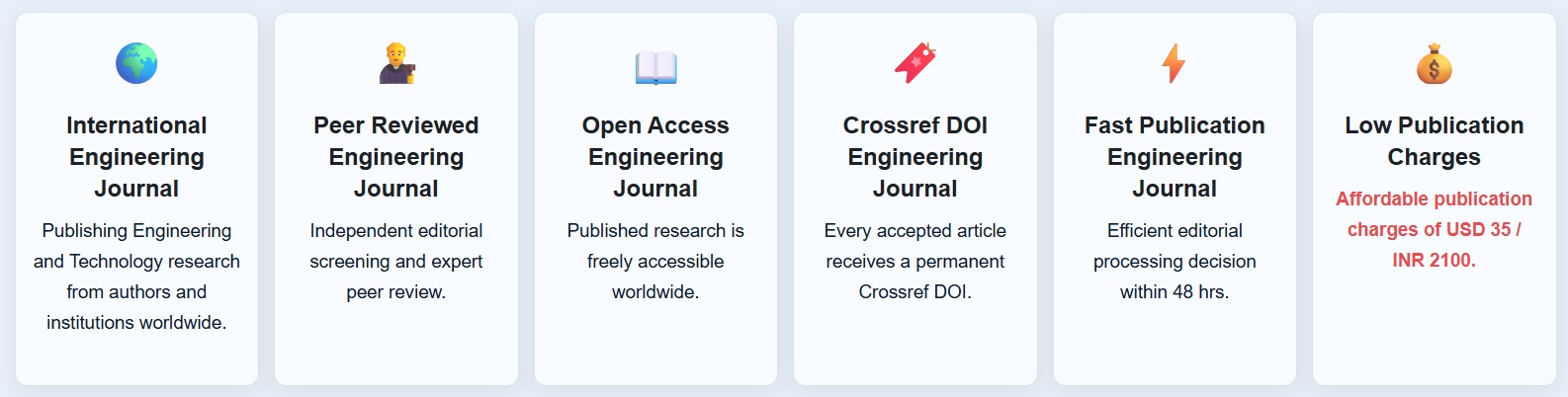
- 🌍 International Open Access Journal
- 👨⚖️ Independent Peer Review
- ⚡ Fast Editorial Processing and Publishing
- 🔗 Crossref DOI at No Additional Cost
- 📜 Free Certificate of Publication
- 💰 Low Article Processing Charges: USD 35 / INR 2100
- 📚 Broad Engineering and Technology Research Coverage
Authors should verify data, originality, ethics, authorship, references, figures, software outputs, and declarations before submission. Publication charges do not influence editorial screening, peer review, correction, retraction, or acceptance decisions.
❓ Frequently Asked Questions About the Retraction Policy
1. What is the Retraction Policy of GJETA?
The Retraction Policy of the Global Journal of Engineering and Technology Advances (GJETA) explains when a published article may be formally marked as unreliable, unethical, duplicated, plagiarised, manipulated, or otherwise unsuitable for continued use as valid research.
2. What grounds are covered by the Retraction Policy?
The Retraction Policy of the Global Journal of Engineering and Technology Advances (GJETA) covers fabricated or falsified data, major errors, plagiarism, duplicate publication, image manipulation, compromised peer review, unethical research, fraudulent authorship, and serious AI misuse.
3. How does the Retraction Policy differ from the Correction Policy?
The Retraction Policy applies when an article published by the Global Journal of Engineering and Technology Advances (GJETA) is fundamentally unreliable or seriously unethical, whereas the Correction Policy applies when limited errors can be repaired while the main findings remain valid.
4. Does the Retraction Policy require author agreement?
No. The Retraction Policy allows the Global Journal of Engineering and Technology Advances (GJETA) to retract an article without author agreement when sufficient evidence shows that retraction is necessary to protect readers and the scholarly record.
5. Does the Retraction Policy remove the article completely?
Normally, no. Under the Retraction Policy, the Global Journal of Engineering and Technology Advances (GJETA) usually keeps the article accessible with a prominent retraction notice so that the DOI, citation, and publication history remain transparent.
6. What information appears in a Retraction Policy notice?
A Retraction Policy notice issued by the Global Journal of Engineering and Technology Advances (GJETA) may identify the article, authors, DOI, reason for retraction, party initiating the action, date of retraction, and whether the authors agreed.
7. Can authors appeal a decision under the Retraction Policy?
Yes. The Retraction Policy allows authors to appeal to the Global Journal of Engineering and Technology Advances (GJETA) when they provide substantive evidence that the decision, supporting facts, procedure, or wording of the retraction notice should be reconsidered.
8. How does the Retraction Policy affect repository copies and citations?
The Retraction Policy requires archived copies of articles from the Global Journal of Engineering and Technology Advances (GJETA) to be marked clearly as retracted and linked to the official notice. Retracted articles should not be cited as reliable evidence.