📤 Manuscript Withdrawal Policy | Global Journal of Engineering and Technology Advances (GJETA)
Establishing a Transparent and Responsible Process for Manuscript Withdrawal
The Global Journal of Engineering and Technology Advances (GJETA) recognises that authors may occasionally need to withdraw a manuscript because of substantial errors, authorship concerns, duplicate submission, ethical issues, institutional restrictions, or other legitimate circumstances. Withdrawal requests must be handled transparently because manuscript processing involves editorial screening, reviewer time, administrative resources, and preparation of publication records.
This Manuscript Withdrawal Policy explains when authors may request withdrawal, how a request should be submitted, what approvals are required, how the journal evaluates withdrawal requests, and what actions may apply before review, during peer review, after acceptance, during production, or after publication.
🎯 Purpose of the Manuscript Withdrawal Policy
The purpose of this Manuscript Withdrawal Policy is to establish a fair and consistent process for authors, editors, reviewers, and the publisher when a manuscript is withdrawn from editorial consideration.
The policy helps GJETA:
- protect the integrity of editorial and peer review records;
- prevent duplicate or simultaneous submission;
- ensure that all authors agree to the withdrawal;
- distinguish legitimate withdrawals from unethical publication practices;
- avoid unnecessary use of editorial and reviewer resources;
- maintain accurate manuscript and publication records;
- clarify the difference between withdrawal, rejection, removal, and retraction.
📘 Meaning of Manuscript Withdrawal
Manuscript withdrawal is the formal removal of a submitted manuscript from further editorial consideration at the request of the authors or through an editorial decision by the journal.
Withdrawal may occur:
- before initial editorial screening;
- during editorial assessment;
- after assignment to reviewers;
- during revision;
- after acceptance but before publication;
- during production or typesetting;
- in exceptional circumstances after online publication, where a different corrective process may apply.
⚖️ Withdrawal Is Not the Same as Rejection
A withdrawal occurs when a manuscript is formally removed from consideration, usually following an author request or an editorial integrity concern. Rejection is an editorial decision indicating that the manuscript will not be published by the journal.
A rejected manuscript does not need to be withdrawn because the editorial process has already concluded. Authors may generally submit a rejected manuscript elsewhere unless the journal is continuing an ethical investigation related to the submission.
⛔ Withdrawal Is Not the Same as Retraction
Retraction applies primarily to an article that has already been published and later found to contain serious errors, unreliable findings, plagiarism, duplicate publication, unethical research, or another major integrity concern.
A manuscript that has not yet been published is normally withdrawn rather than retracted. Once an article has been formally published, the journal’s Retraction Policy or another post-publication policy may apply.
👨🔬 Author Responsibility Before Submission
Authors should review the manuscript carefully before submission and confirm that:
- all authors have approved the submitted version;
- the author list and author order are correct;
- the manuscript is not under consideration elsewhere;
- all required ethical approvals and permissions have been obtained;
- the data, figures, tables, references, and declarations are accurate;
- institutional or contractual restrictions do not prevent publication;
- the manuscript is ready for editorial and peer review.
Careful preparation reduces avoidable withdrawal requests and prevents unnecessary use of editorial and reviewer resources.
✅ Legitimate Reasons for Withdrawal
A withdrawal request may be considered when supported by a clear and reasonable explanation.
Legitimate reasons may include:
- discovery of a substantial error affecting the manuscript’s reliability;
- an unresolved authorship dispute;
- submission without the approval of all authors;
- identification of ethical approval or consent problems;
- institutional, legal, security, or contractual restrictions;
- serious concern regarding data accuracy or research integrity;
- accidental submission of an incorrect or incomplete manuscript;
- unexpected inability to complete essential revisions;
- discovery that the manuscript substantially overlaps with another publication.
🚫 Inappropriate Reasons for Withdrawal
The journal may question withdrawal requests that appear to be intended to manipulate editorial processing, avoid reviewer criticism, or submit the same manuscript to another journal while it remains under active consideration.
Examples of inappropriate withdrawal behaviour may include:
- withdrawing solely because another journal appears likely to publish faster;
- submitting the manuscript elsewhere before receiving formal withdrawal confirmation;
- withdrawing after acceptance to avoid agreed publication responsibilities without a legitimate reason;
- using repeated submissions and withdrawals to obtain free editorial or reviewer feedback;
- withdrawing to conceal plagiarism, fabricated data, duplicate submission, or another ethical concern;
- requesting withdrawal because the authors disagree with reasonable revision requirements but providing no substantive explanation.
📧 How to Submit a Withdrawal Request
A withdrawal request should be submitted through the journal’s official communication channel by the corresponding author.
The request should include:
- the manuscript title;
- the manuscript or submission identification number;
- the name of the corresponding author;
- a clear explanation for withdrawal;
- confirmation that all listed authors agree;
- supporting documentation where relevant.
✍️ Agreement of All Authors
A withdrawal request should ordinarily be approved by all listed authors. The corresponding author should confirm that each co-author has been informed and agrees to the withdrawal.
Where author agreement cannot be obtained, GJETA may:
- pause editorial processing;
- request written statements from the authors;
- refer the matter to the relevant institution;
- delay withdrawal confirmation until the dispute is clarified;
- continue an ethical investigation where necessary.
📌 Formal Confirmation Principle
A manuscript submitted to the Global Journal of Engineering and Technology Advances (GJETA) remains under editorial consideration until the journal provides formal written confirmation of withdrawal. Authors should not submit the manuscript to another journal before receiving that confirmation.
📥 Withdrawal Before Editorial Screening
A manuscript may generally be withdrawn more easily when the request is received shortly after submission and before editorial screening, reviewer assignment, or substantial administrative processing has begun.
The journal may verify:
- the identity of the corresponding author;
- the manuscript details;
- the agreement of all authors;
- the reason for the request;
- whether another ethical or duplicate-submission concern exists.
🔍 Withdrawal During Editorial Screening
Authors may request withdrawal while a manuscript is undergoing initial editorial assessment. The request should be submitted promptly and should explain why withdrawal is necessary.
If editors have already identified plagiarism, duplicate submission, authorship irregularities, fabricated information, or another ethical concern, withdrawal may not end the journal’s responsibility to investigate the matter.
👨⚖️ Withdrawal During Peer Review
Withdrawal during peer review affects editors and reviewers who have already invested time and expertise in evaluating the manuscript. Authors should therefore provide a clear and legitimate explanation.
The journal may consider:
- whether reviewer reports have already been received;
- whether the request follows substantial editorial work;
- whether the authors intend to submit the manuscript elsewhere;
- whether ethical concerns have been raised;
- whether all authors support withdrawal.
Reviewer reports and editorial records remain confidential and do not become the property of the authors merely because the manuscript is withdrawn.
🔄 Withdrawal During Revision
Authors may request withdrawal after receiving a revision decision. A request should explain why the authors cannot or do not intend to continue with the revision.
Legitimate circumstances may include:
- discovery of a serious flaw in the research;
- inability to obtain essential supporting data;
- an unresolved authorship or ethical problem;
- institutional restrictions that prevent continued publication;
- substantial changes that would require preparation of a fundamentally new study.
Simple disagreement with reviewer comments does not automatically justify withdrawal, although authors retain the right to discontinue consideration after following the formal process.
✅ Withdrawal After Acceptance
Withdrawal after acceptance is more serious because the manuscript has completed editorial assessment and peer review, and the journal may already have begun copyediting, formatting, metadata preparation, DOI registration, or production.
An after-acceptance withdrawal request should include:
- a detailed explanation;
- written agreement from all authors;
- confirmation that no duplicate publication has occurred;
- supporting evidence where ethical, legal, or institutional issues are involved;
- acknowledgement that production work may already have been completed.
🖥️ Withdrawal During Production
A manuscript entering production may already have undergone formatting, proofreading, metadata registration, issue assignment, or preparation for online publication.
At this stage, the journal may need to determine:
- whether publication can still be stopped;
- whether a DOI or article record has already been created;
- whether the manuscript has been included in an issue;
- whether third-party services have received article metadata;
- whether a formal withdrawal notice is required.
📅 Withdrawal After Online-First Publication
Once an article has been made publicly available as an official publication, it may no longer qualify for ordinary manuscript withdrawal.
Depending on the circumstances, the journal may apply:
- a correction;
- an expression of concern;
- a retraction;
- a removal notice in exceptional legal or safety-related circumstances.
The official publication record should not be removed solely because authors change their preference after publication.
💰 Publication Charges and Withdrawal
Article processing charges and payment arrangements remain separate from editorial and peer review decisions. Withdrawal does not automatically create or remove financial obligations.
The applicable outcome may depend on:
- the stage at which withdrawal is requested;
- whether production or publication services have been completed;
- whether an invoice has already been issued;
- whether the article has been formally published;
- the journal’s communicated payment conditions.
Authors should contact the journal directly for clarification regarding any manuscript-specific financial matter.
🧾 Withdrawal Confirmation
A withdrawal becomes effective only after GJETA issues formal written confirmation. The confirmation should identify the manuscript and indicate that editorial consideration has ended.
Authors should retain the confirmation for their records, particularly before submitting the manuscript to another journal.
🔁 Resubmission of a Withdrawn Manuscript
A withdrawn manuscript may be considered as a new submission only where permitted by the journal and where the reasons for the previous withdrawal have been addressed.
The authors may be required to:
- disclose the previous submission;
- explain why the manuscript was withdrawn;
- provide a substantially revised version;
- resolve authorship, ethical, technical, or data concerns;
- complete a new editorial and peer review process.
📚 Use of Reviewer Comments After Withdrawal
Reviewer comments are provided confidentially for the journal’s editorial process. Authors may use constructive feedback to improve their work, but they must not publish, distribute, or attribute confidential reviewer reports without permission.
Withdrawal does not authorise disclosure of reviewer identities, editorial correspondence, or confidential manuscript records.
🏢 Institutional Withdrawal Requests
An institution, research-integrity office, ethics committee, funder, or authorised representative may contact the journal regarding serious concerns affecting a submitted manuscript.
The journal may request:
- confirmation of the institution’s authority;
- details of the concern;
- supporting documentation;
- information about any ongoing investigation;
- clarification regarding the requested editorial action.
🚨 Withdrawal and Duplicate Submission
Authors must not submit the same or substantially similar manuscript to another journal while it remains under consideration by GJETA.
When duplicate submission is suspected, the journal may:
- contact the authors for clarification;
- communicate with the other journal where appropriate;
- reject or withdraw the manuscript;
- notify the authors’ institution;
- restrict future submissions in serious or repeated cases.
A request to withdraw after simultaneous submission is discovered does not automatically end the ethical review.
📄 Withdrawal and Plagiarism Concerns
A manuscript containing suspected plagiarism may not simply be removed from the record without assessment. GJETA may continue reviewing the concern under its Plagiarism Policy.
The journal may preserve:
- the submitted manuscript;
- similarity reports;
- editorial correspondence;
- author explanations;
- supporting evidence;
- records of any institutional referral.
👥 Withdrawal and Authorship Disputes
If authors disagree about withdrawal, author order, contributor eligibility, manuscript ownership, or submission approval, the journal may pause processing and refer the matter to the relevant institution.
GJETA does not determine legal ownership of research or resolve institutional employment disputes. The journal may act on a formal institutional determination where appropriate.
📊 Withdrawal and Data-Integrity Concerns
When a withdrawal request relates to unreliable, fabricated, falsified, missing, or manipulated data, GJETA may request supporting records or institutional clarification.
The journal may continue an investigation when necessary to protect:
- research participants;
- the integrity of the peer review process;
- other journals from duplicate or unreliable submission;
- institutions and funders;
- the wider scholarly record.
⚠️ Withdrawal Does Not Erase Ethical Responsibility
Withdrawal ends editorial consideration of the manuscript but does not erase concerns involving:
- plagiarism;
- duplicate submission;
- fabricated or falsified data;
- unethical research;
- fraudulent authorship;
- misrepresentation of approvals or permissions;
- breach of reviewer confidentiality;
- copyright infringement.
Where justified, GJETA may continue an ethical inquiry after withdrawal and may contact relevant institutions, funders, journals, or authorities.
🗂️ Retention of Withdrawal Records
The journal may retain manuscript files, editorial correspondence, reviewer reports, withdrawal requests, author confirmations, and ethical investigation records for administrative, legal, scholarly-integrity, and audit purposes.
Retention of internal records does not mean that the manuscript remains under active consideration or will be publicly published.
🔐 Confidentiality of Withdrawn Manuscripts
Withdrawn manuscripts remain confidential. Editors, reviewers, and editorial staff must not use unpublished content for personal, commercial, academic, or competitive advantage.
Confidentiality obligations continue after withdrawal.
📢 Withdrawal Notices
A public withdrawal notice may be necessary when a manuscript or article record has already been posted online, assigned a DOI, included in an issue, or distributed through indexing and metadata services.
A notice may identify:
- the manuscript or article title;
- the authors;
- the reason for withdrawal where appropriate;
- the date of withdrawal;
- whether the content should no longer be cited.
Confidential personal, legal, or investigative details may be omitted where disclosure would be inappropriate.
🚫 Unauthorised Withdrawal Claims
An author should not publicly claim that a manuscript has been withdrawn before receiving formal confirmation from the journal.
Likewise, one co-author should not request withdrawal on behalf of the entire author group without appropriate authority and confirmation.
📧 Failure to Respond to Editorial Communication
If authors fail to respond to revision requests, ethical questions, proof corrections, or other essential communication for an extended period, the journal may close or withdraw the manuscript administratively.
Administrative closure may occur when:
- the corresponding author cannot be contacted;
- required revisions remain overdue without explanation;
- essential author confirmation is not provided;
- publication cannot proceed because required documents are missing;
- authors abandon the submission process.
🔄 Reopening an Administratively Closed Manuscript
A request to reopen an administratively closed manuscript may be considered at the journal’s discretion.
The authors may need to:
- explain the earlier lack of communication;
- confirm the current author list;
- submit updated files and declarations;
- complete a new editorial assessment;
- accept that new peer review may be required.
📣 Complaints and Appeals
Authors may appeal a withdrawal-related decision when they believe:
- the request was misunderstood;
- all author approvals were provided but not recognised;
- a procedural error occurred;
- the manuscript was closed incorrectly;
- important ethical, legal, or institutional evidence was overlooked.
An appeal should identify the manuscript, explain the concern clearly, and provide supporting documentation.
🛠️ Enforcement of the Manuscript Withdrawal Policy
The journal’s response will depend on the stage of processing, the reason for withdrawal, the agreement of the authors, the editorial resources already used, and any associated ethical concerns.
Possible actions may include:
- approving the withdrawal;
- requesting additional author confirmation;
- pausing processing pending clarification;
- administratively closing the manuscript;
- rejecting the manuscript;
- continuing an ethical investigation;
- issuing a public withdrawal notice;
- contacting an institution, funder, another journal, or responsible authority;
- restricting future submissions in serious or repeated cases of misconduct.
📌 Editorial Integrity Principle
The Global Journal of Engineering and Technology Advances (GJETA) considers legitimate withdrawal requests fairly, but withdrawal cannot be used to conceal duplicate submission, plagiarism, unreliable data, authorship misconduct, or another breach of publication ethics.
🌟 Why the Manuscript Withdrawal Policy Matters
A clear Manuscript Withdrawal Policy helps authors understand how to discontinue editorial consideration responsibly while protecting reviewers, editors, institutions, and the integrity of scholarly publishing. It also prevents confusion about whether a manuscript remains under consideration and whether it may be submitted elsewhere.
For the Global Journal of Engineering and Technology Advances (GJETA), a transparent withdrawal process is especially important because engineering and technology manuscripts may involve multiple authors, institutions, confidential designs, proprietary data, software, patents, industrial partners, and complex ethical or contractual obligations.
The Manuscript Withdrawal Policy helps GJETA:
- provide a formal withdrawal procedure;
- confirm agreement among all authors;
- prevent simultaneous and duplicate submission;
- protect reviewer and editorial resources;
- preserve confidential manuscript records;
- address ethical concerns that remain after withdrawal;
- distinguish withdrawal from rejection and retraction;
- maintain accurate editorial and publication records.
🔗 Related GJETA Editorial and Publishing Policies
Authors, reviewers, editors, and institutions are encouraged to review the following policies of the Global Journal of Engineering and Technology Advances for a complete understanding of manuscript withdrawal, publication ethics, authorship, originality, corrections, retractions, and post-publication accountability.
🚀 Submit Your Manuscript Responsibly to GJETA
The Global Journal of Engineering and Technology Advances (GJETA) welcomes original research articles, review papers, technical studies, software research, case studies, short communications, and interdisciplinary manuscripts prepared with complete author approval and responsible publication practices.
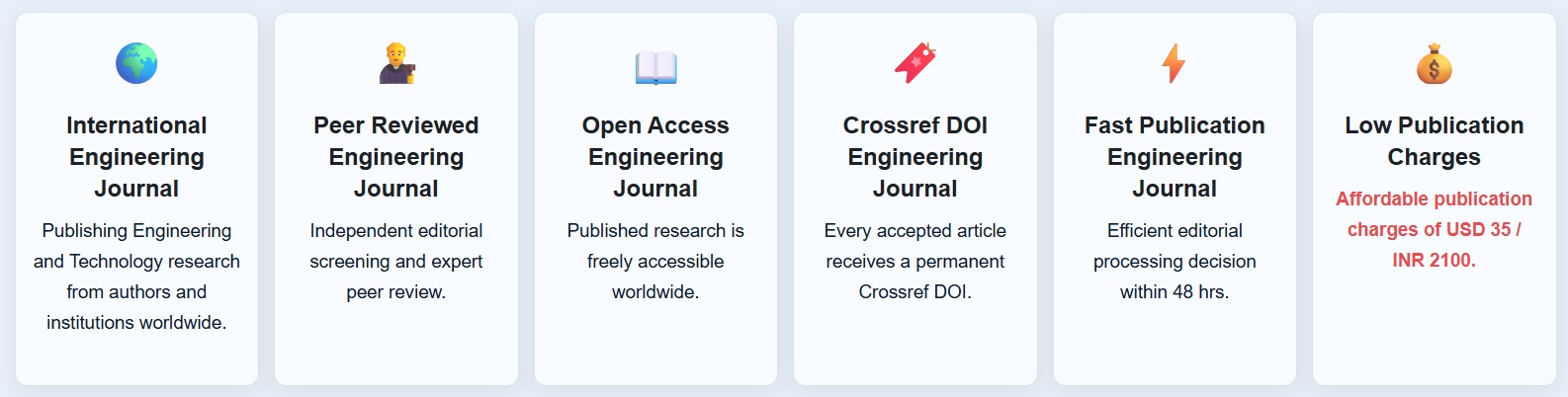
- 🌍 International Open Access Journal
- 👨⚖️ Independent Peer Review
- ⚡ Fast Editorial Processing and Publishing
- 🔗 Crossref DOI at No Additional Cost
- 📜 Free Certificate of Publication
- 💰 Low Article Processing Charges: USD 35 / INR 2100
- 📚 Broad Engineering and Technology Research Coverage
Before submission, authors should confirm originality, authorship, ethical approval, data accuracy, institutional permission, and readiness for peer review. Authors requiring withdrawal should follow the formal procedure and wait for written confirmation before submitting the manuscript elsewhere.
❓ Frequently Asked Questions About the Manuscript Withdrawal Policy
1. What is the Manuscript Withdrawal Policy of GJETA?
The Manuscript Withdrawal Policy of the Global Journal of Engineering and Technology Advances (GJETA) explains how authors may formally request removal of a manuscript from editorial consideration before publication and how the journal handles such requests.
2. How can authors submit a request under the Manuscript Withdrawal Policy?
Under the Manuscript Withdrawal Policy, the corresponding author should contact the Global Journal of Engineering and Technology Advances (GJETA) through an official communication channel and provide the manuscript details, reason for withdrawal, and confirmation from all authors.
3. Does the Manuscript Withdrawal Policy require approval from all authors?
Yes. The Manuscript Withdrawal Policy of the Global Journal of Engineering and Technology Advances (GJETA) ordinarily requires confirmation that all listed authors know about and agree to the withdrawal request.
4. Can authors submit elsewhere immediately under the Manuscript Withdrawal Policy?
No. The Manuscript Withdrawal Policy requires authors to wait until the Global Journal of Engineering and Technology Advances (GJETA) provides formal written confirmation before submitting the same manuscript to another journal.
5. Does the Manuscript Withdrawal Policy allow withdrawal during peer review?
Yes. The Manuscript Withdrawal Policy allows authors to request withdrawal during peer review, but the Global Journal of Engineering and Technology Advances (GJETA) may require a clear explanation because reviewers and editors may already have completed substantial work.
6. How does the Manuscript Withdrawal Policy apply after acceptance?
The Manuscript Withdrawal Policy treats post-acceptance requests more seriously because the Global Journal of Engineering and Technology Advances (GJETA) may already have completed peer review, editing, formatting, metadata preparation, or production work.
7. Does the Manuscript Withdrawal Policy end an ethical investigation?
No. The Manuscript Withdrawal Policy confirms that the Global Journal of Engineering and Technology Advances (GJETA) may continue investigating plagiarism, duplicate submission, data concerns, authorship misconduct, or other ethical issues after withdrawal.
8. Does the Manuscript Withdrawal Policy apply after publication?
Once an article has been officially published, the ordinary Manuscript Withdrawal Policy may no longer apply. The Global Journal of Engineering and Technology Advances (GJETA) may instead use a correction, expression of concern, retraction, or exceptional removal procedure.