⚠️ Conflict of Interest Policy | Global Journal of Engineering and Technology Advances (GJETA)
Promoting Transparency, Independence and Trust in Scholarly Publishing
The Global Journal of Engineering and Technology Advances (GJETA) is committed to maintaining transparency, fairness, and editorial independence throughout the research and publication process. Conflicts of interest may arise when personal, financial, professional, academic, institutional, or commercial relationships could influence—or reasonably appear to influence—the conduct, evaluation, interpretation, or publication of scholarly work.
This Conflict of Interest Policy explains the responsibilities of authors, reviewers, editors, editorial board members, and the publisher in identifying, disclosing, and managing competing interests. The purpose of disclosure is not necessarily to prevent publication or participation in peer review, but to ensure that relevant relationships are considered openly and managed appropriately.
🎯 Purpose of the Conflict of Interest Policy
The purpose of this Conflict of Interest Policy is to protect the integrity of editorial decisions, peer review, research reporting, and published conclusions. Transparent disclosure enables editors and readers to assess whether external relationships could have influenced the research or its interpretation.
The policy also helps GJETA:
- maintain independent editorial decision-making;
- protect the fairness and credibility of peer review;
- promote transparent research reporting;
- identify relationships that may affect scholarly judgement;
- manage competing interests proportionately;
- preserve confidence in published engineering and technology research.
📘 Definition of a Conflict of Interest
A conflict of interest exists when an individual’s judgement, responsibilities, or actions may be influenced by a secondary interest. The secondary interest may be financial, personal, professional, academic, institutional, political, legal, or commercial.
A competing interest does not always mean that misconduct has occurred. However, failure to disclose a relevant relationship may create doubt about the independence, transparency, or reliability of the publication process.
🔍 Actual, Potential and Perceived Conflicts of Interest
✔ Actual Conflict of Interest
An actual conflict exists when a relationship directly affects an individual’s ability to act impartially or independently.
✔ Potential Conflict of Interest
A potential conflict exists when a relationship may develop into a situation that could affect professional judgement or decision-making.
✔ Perceived Conflict of Interest
A perceived conflict exists when a reasonable reader, author, reviewer, or editor could believe that a relationship may have influenced the research or publication process, even if no direct influence occurred.
GJETA expects relevant actual, potential, and perceived conflicts to be disclosed so that the editorial team can determine whether any management action is necessary.
💰 Financial Conflicts of Interest
Financial relationships are among the most common sources of competing interests in scholarly research. Authors, reviewers, and editors should disclose relevant financial connections that may influence—or appear to influence—the research, manuscript, peer review, or editorial decision.
Examples may include:
- employment by an organisation connected to the research;
- consultancy or advisory fees;
- research grants or sponsored funding;
- honoraria or paid speaking engagements;
- ownership of shares, stock, or equity;
- patent ownership, licensing rights, or royalties;
- paid expert testimony;
- commercial contracts or business partnerships;
- equipment, software, materials, or services provided by a sponsor.
🏢 Institutional and Professional Conflicts of Interest
Institutional and professional relationships may also affect impartiality. These may include current or recent employment, collaboration, supervision, mentorship, academic rivalry, or shared institutional responsibilities.
Potential institutional or professional conflicts may arise when:
- an editor handles a manuscript from a close colleague or collaborator;
- a reviewer evaluates work from the same department or institution;
- an author and reviewer have recently published together;
- a reviewer is directly competing with the authors in the same research area;
- an editor has supervisory, employment, or financial authority over an author;
- a manuscript involves an institution with which the editor has a formal relationship.
👤 Personal Conflicts of Interest
Personal relationships can influence professional judgement and should be disclosed where relevant. These may involve close friendships, family relationships, personal disputes, legal conflicts, or other circumstances that could affect impartiality.
Individuals should decline participation when a personal relationship makes objective evaluation difficult or creates a reasonable appearance of bias.
🎓 Academic and Intellectual Conflicts of Interest
Academic competition, strong intellectual disagreement, prior criticism, or ownership of a competing theory or method may also create a conflict of interest.
A reviewer or editor should consider whether their professional position on a subject could prevent a fair assessment of the manuscript. Scholarly disagreement alone does not always require withdrawal, but it should not lead to biased, obstructive, or retaliatory evaluation.
🏭 Commercial and Industry-Related Conflicts
Engineering and technology research may involve collaboration with companies, manufacturers, software developers, laboratories, consulting firms, startups, or industrial sponsors. These relationships should be disclosed when they are relevant to the research or publication.
Examples may include:
- research funded by a commercial organisation;
- development or testing of a proprietary product;
- consultancy work connected to the manuscript topic;
- ownership of a technology or software described in the article;
- commercial benefit expected from publication of the findings;
- employment by a company whose products are evaluated in the study.
🧾 Author Responsibilities for Disclosure
Authors are responsible for identifying and disclosing any relationship that could reasonably influence the research or its interpretation. Disclosure should be made during submission and updated if circumstances change before publication.
Authors should disclose:
- all relevant funding sources;
- commercial or institutional sponsorship;
- employment, consultancy, or advisory relationships;
- patents, royalties, licensing interests, or ownership rights;
- stock ownership or financial interests;
- personal or professional relationships relevant to the work;
- any role of the funder in the research or publication process.
📄 Conflict of Interest Statement
Every manuscript should include an appropriate conflict of interest declaration. When no competing interests exist, authors should provide a clear statement confirming that they have no conflicts to disclose.
An appropriate declaration may state either:
- that the authors have no competing interests to declare; or
- the specific financial, professional, institutional, or personal relationships relevant to the manuscript.
The statement should be accurate, complete, and approved by all listed authors.
📌 Transparency Principle
Disclosure of a conflict of interest does not automatically prevent publication in the Global Journal of Engineering and Technology Advances (GJETA). The purpose of disclosure is to ensure transparency and allow the journal to manage relevant relationships fairly while protecting the independence of peer review and editorial decision-making.
👨⚖️ Reviewer Responsibilities for Conflicts of Interest
Reviewers invited by the Global Journal of Engineering and Technology Advances (GJETA) must evaluate whether any personal, professional, financial, institutional, academic, or commercial relationship could interfere with an impartial review. Reviewers should disclose relevant conflicts promptly and decline the assignment when objective assessment cannot be maintained.
Potential reviewer conflicts may arise when the reviewer:
- works at the same institution as one or more authors;
- has recently collaborated or published with the authors;
- has a supervisory, mentoring, employment, or financial relationship with an author;
- has a personal friendship, family relationship, or professional dispute with an author;
- is directly competing with the authors in the same research area;
- has a financial interest in the technology, product, method, software, or findings described in the manuscript;
- has previously reviewed or advised on the same work in another context;
- cannot evaluate the manuscript without significant personal or intellectual bias.
A reviewer should not accept an assignment merely because the conflict appears manageable from their own perspective. The reviewer should provide sufficient information to the editor, who will decide whether reassignment is necessary.
🔒 Confidentiality and Reviewer Independence
Reviewers must preserve the confidentiality of all submitted manuscripts and must not use unpublished information for personal research, commercial benefit, academic advantage, patent development, or professional competition.
A conflict of interest may be especially serious when a reviewer could benefit directly from:
- access to unpublished data;
- knowledge of a new engineering design or technical method;
- information about a pending patent or commercial product;
- early access to software, algorithms, source code, or models;
- awareness of research results before public release.
Reviewers must not delay, obstruct, or influence publication for competitive advantage. Any misuse of confidential manuscript information may be treated as a serious breach of publication ethics.
👨💼 Editor Responsibilities for Conflicts of Interest
Editors are responsible for maintaining independent and fair editorial decision-making. An editor should not handle a manuscript when a relevant relationship could compromise—or reasonably appear to compromise—objectivity.
Editors should disclose and appropriately manage conflicts involving:
- recent collaboration with an author;
- employment at the same institution;
- personal, supervisory, or financial relationships;
- academic competition or professional disputes;
- patent, consultancy, ownership, or commercial interests;
- direct involvement in the research being evaluated;
- responsibility for a manuscript written by a student, supervisor, colleague, or close collaborator.
When an editor has a significant conflict, editorial responsibility should be transferred to another qualified editor who can act independently.
📋 Editorial Board Member Conflicts
Membership of the editorial board does not prevent an individual from submitting a manuscript to GJETA. However, manuscripts submitted by editors or editorial board members must be handled through an independent process.
The submitting editor or board member should not:
- select reviewers for their own manuscript;
- access confidential reviewer identities where restricted;
- influence the editorial decision;
- participate in correspondence concerning the evaluation;
- use their editorial position to obtain preferential treatment.
A separate editor without a relevant conflict should manage the manuscript from initial screening through the final decision.
🏛️ Publisher Responsibilities and Editorial Independence
The publisher should protect editorial independence and must not allow financial, commercial, institutional, or personal interests to influence manuscript decisions.
Publication charges, sponsorship, advertising, partnerships, or other business arrangements must remain separate from peer review and editorial assessment. A manuscript should be accepted or rejected only according to its academic merit, technical quality, ethical compliance, and relevance to the journal’s scope.
💳 Publication Charges and Conflict of Interest
Payment of an article processing charge does not create entitlement to acceptance or publication. The low article processing charge offered by GJETA is separate from editorial screening, peer review, revision requirements, and final acceptance.
Editors and reviewers should not be influenced by:
- whether an author can pay publication charges;
- the author’s institution, nationality, or professional status;
- the commercial value of the research;
- the possibility of attracting future submissions;
- potential financial benefit to the journal or publisher.
💰 Funding Disclosure Requirements
Authors should identify all financial support connected to the research, including grants, institutional funding, commercial sponsorship, equipment support, software access, consultancy arrangements, and in-kind assistance.
The funding statement should explain, where relevant, whether the funder had any role in:
- study design;
- data collection;
- data analysis;
- interpretation of results;
- manuscript preparation;
- selection of the journal;
- the decision to submit or publish.
When the funder had no involvement in these activities, authors may state this clearly.
🏭 Sponsor Influence and Research Independence
Commercial or institutional sponsors must not suppress unfavourable findings, restrict access to data, control conclusions, or prevent publication without legitimate legal or ethical justification.
Authors should disclose agreements that affect:
- ownership of research data;
- access to raw results;
- approval of the manuscript before submission;
- restrictions on publication;
- intellectual property or patent filing;
- commercial use of the findings.
Editors may request clarification when a sponsor’s role could affect the independence, transparency, or reliability of the research.
🧠 Intellectual Property and Patent Interests
Engineering and technology research may result in patents, licensing opportunities, proprietary methods, commercial software, devices, processes, or industrial applications. Such interests should be disclosed when they are relevant to the manuscript.
Potential intellectual property conflicts may include:
- pending or granted patents;
- licensing agreements;
- royalty rights;
- ownership of proprietary software or technology;
- commercialisation plans;
- financial interests in a company using the reported invention.
Patent or ownership interests do not automatically prevent publication, but transparent disclosure is necessary so that readers and editors can evaluate the context of the research.
🤝 Consultancy, Advisory and Employment Relationships
Authors, reviewers, or editors should disclose relevant consultancy, advisory, employment, directorship, or professional service relationships with organisations connected to the subject of the manuscript.
These relationships may be important when the manuscript evaluates:
- a product or service offered by the organisation;
- a proprietary engineering system;
- commercial software or hardware;
- an industrial process or technical standard;
- a technology in which the individual has a financial interest.
🌍 Institutional and Government Interests
Conflicts of interest may also arise when research is connected to government agencies, public institutions, regulatory bodies, defence organisations, or policy programmes.
Authors should disclose whether institutional or governmental interests influenced access to data, reporting of findings, publication approval, or interpretation of results. Restrictions based on confidentiality, security, legal obligations, or public-interest considerations should be explained transparently where possible.
📢 Disclosure at Submission and During Review
Conflict of interest declarations should be made at the time of manuscript submission. Authors are responsible for updating the journal if relevant circumstances change during peer review, revision, acceptance, or production.
Reviewers and editors must also disclose new conflicts that become apparent after they have accepted responsibility for a manuscript.
Early disclosure allows the journal to manage the situation efficiently and reduces the risk of delays, reassignment, correction, or post-publication concern.
🛠️ Management of Disclosed Conflicts
When a conflict is disclosed, the journal will evaluate its relevance and seriousness. Appropriate management may include:
- publishing a conflict of interest statement with the article;
- assigning a different reviewer or editor;
- requesting additional independent review;
- seeking clarification from the authors;
- requiring more detailed funding or sponsor disclosure;
- excluding an individual from a specific editorial decision;
- documenting how the conflict was managed.
The aim is to manage the relationship transparently rather than exclude individuals unnecessarily when impartiality can still be protected.
📌 Conflict Management Principle
The Global Journal of Engineering and Technology Advances (GJETA) evaluates conflicts of interest according to their relevance, seriousness, and potential effect on research reporting, peer review, or editorial judgement. Transparent disclosure enables appropriate management and helps preserve trust in the publication process.
🚨 Undisclosed Conflicts of Interest
Failure to disclose a relevant conflict of interest may undermine confidence in the research, peer review, editorial decision, or published article. The Global Journal of Engineering and Technology Advances (GJETA) treats undisclosed competing interests seriously, particularly when the relationship could reasonably have influenced the conduct, evaluation, interpretation, or publication of the work.
An undisclosed conflict may be identified before publication, during peer review, after acceptance, or following publication. Concerns may be raised by authors, reviewers, editors, readers, institutions, funders, or other stakeholders.
🔍 Investigation of Undisclosed Conflicts
When a credible concern is reported, GJETA may conduct an editorial assessment to determine whether a relevant relationship existed and whether it should have been disclosed.
The journal may:
- review the manuscript, declarations, funding statements, and editorial records;
- request clarification from the authors, reviewers, or editors involved;
- ask for grant information, employment details, consultancy records, patent declarations, or other supporting documentation;
- consult independent editorial board members or subject experts;
- contact the relevant institution, funder, employer, or research integrity office where necessary;
- assess whether the conflict affected the research findings, peer review, or editorial decision.
The presence of an undisclosed relationship does not automatically establish misconduct. The journal will consider the relevance, timing, seriousness, and likely influence of the competing interest before determining an appropriate response.
📝 Author Clarification and Correction of Disclosures
Authors may be asked to provide a complete explanation when a conflict of interest appears to have been omitted, described inaccurately, or disclosed incompletely.
Where the omission is limited and does not affect the reliability of the research, the journal may require:
- a revised conflict of interest statement;
- an updated funding declaration;
- clarification of the sponsor’s role;
- correction of employment, patent, consultancy, or ownership information;
- a formal correction notice after publication.
Prompt and transparent cooperation may help resolve the matter efficiently and preserve confidence in the published record.
👨⚖️ Reviewer Misconduct and Undisclosed Conflicts
A reviewer who accepts a manuscript despite a significant undisclosed conflict may compromise the fairness and independence of peer review.
Examples may include:
- reviewing work from a close collaborator or direct competitor without disclosure;
- using unpublished information for personal or commercial benefit;
- delaying publication to gain academic or competitive advantage;
- allowing personal hostility or professional rivalry to influence the report;
- recommending rejection to protect a financial or intellectual interest;
- requesting irrelevant citations for personal benefit.
Where such conduct is confirmed, GJETA may disregard the review, appoint an independent reviewer, remove the individual from future review assignments, or initiate further ethical action where appropriate.
👨💼 Editor Misconduct and Undisclosed Conflicts
Editors must not use their position to influence decisions involving close colleagues, collaborators, students, supervisors, institutional partners, commercial interests, or personal disputes.
When an editor’s undisclosed conflict is identified, the journal may:
- transfer the manuscript to another editor;
- reassess the editorial decision independently;
- seek additional peer review;
- review whether confidential information was misused;
- remove the editor from handling the manuscript;
- take further action under the journal’s publication ethics procedures.
📚 Post-Publication Disclosure of Conflicts
A relevant conflict of interest discovered after publication may require a formal update to the article. The type of action depends on whether the omission affects transparency only or raises concerns about the validity, independence, or reliability of the published work.
Possible actions may include:
- adding or correcting a conflict of interest statement;
- updating the funding or sponsor declaration;
- issuing a correction notice;
- publishing an expression of concern;
- re-evaluating the article through independent editorial or expert review;
- retracting the article in severe cases where the conflict is connected to unreliable or deliberately misleading research.
✏️ Corrections Related to Conflicts of Interest
A correction may be appropriate when a relevant relationship was omitted or reported inaccurately but the main findings of the article remain reliable.
The correction should clearly identify:
- the original article;
- the omitted or incorrect information;
- the revised conflict of interest or funding statement;
- any clarification concerning the sponsor’s role;
- the date and nature of the update.
Corrections should remain permanently linked to the published article so that readers can understand the full publication history.
⚠️ Expressions of Concern
An expression of concern may be considered when a serious undisclosed conflict is under investigation and the available evidence is incomplete, disputed, or awaiting institutional review.
An expression of concern does not establish misconduct. It informs readers that unresolved questions exist and that further editorial action may follow.
⛔ Retraction in Serious Cases
Retraction may be considered when an undisclosed conflict is associated with serious research misconduct, manipulated findings, suppressed data, compromised peer review, fraudulent declarations, or other circumstances that make the published article unreliable.
Retraction is not normally used solely because a disclosure was omitted if the research remains valid and the matter can be corrected transparently.
📢 Complaints and Appeals
Authors, reviewers, editors, or other affected parties may raise a complaint regarding the handling of a conflict of interest. The complaint should explain the concern clearly and include relevant supporting information.
An appeal may be considered when an individual believes that:
- a conflict was assessed incorrectly;
- important evidence was overlooked;
- the management action was disproportionate;
- a procedural error affected the outcome;
- the editorial decision was influenced by an undisclosed competing interest.
Where appropriate, the appeal may be reviewed by an editor or editorial board member who was not involved in the original decision.
🏢 Institutional Referral
Some conflict-of-interest concerns may require investigation beyond the journal’s authority, particularly where employment contracts, financial records, patents, institutional responsibilities, or research agreements are involved.
GJETA may refer unresolved or serious matters to:
- the authors’ institution;
- a research integrity office;
- an ethics committee;
- a funding agency;
- an employer or sponsor;
- another appropriate authority.
The journal may consider the findings of such investigations when deciding whether further editorial action is required.
🧾 Record-Keeping and Documentation
The journal may retain records relating to conflict-of-interest declarations, reviewer disclosures, editorial recusals, sponsor statements, complaints, investigations, and corrective actions.
Appropriate documentation helps ensure consistency, accountability, and transparency in the management of competing interests.
🛠️ Enforcement of the Conflict of Interest Policy
The editorial response will depend on the seriousness of the conflict, whether it was disclosed, the stage of publication, the extent of any influence, and the cooperation of the parties involved.
Possible actions may include:
- requesting clarification or additional disclosure;
- reassigning a reviewer or editor;
- seeking independent review;
- requiring revision of declarations;
- rejecting or withdrawing a manuscript;
- issuing a correction or expression of concern;
- retracting an article in severe cases;
- contacting the relevant institution or funder;
- restricting future participation in review, editorial work, or submission where serious misconduct is confirmed.
Editorial action is intended to protect transparency, impartiality, and the integrity of the scholarly record rather than to impose automatic penalties for every disclosed or manageable relationship.
📌 Accountability Principle
The Global Journal of Engineering and Technology Advances (GJETA) expects authors, reviewers, editors, and the publisher to disclose relevant competing interests honestly and promptly. Transparent management of conflicts helps preserve editorial independence, fair peer review, and reader confidence in published research.
🌟 Why the Conflict of Interest Policy Matters
A clear Conflict of Interest Policy helps authors, reviewers, editors, institutions, and readers understand how financial, professional, academic, institutional, personal, and commercial relationships should be disclosed and managed. Transparent disclosure does not automatically indicate wrongdoing; instead, it allows relevant interests to be evaluated fairly and prevents hidden influences from weakening confidence in research or editorial decisions.
For the Global Journal of Engineering and Technology Advances (GJETA), effective management of competing interests is especially important because engineering and technology research may involve industry partnerships, commercial products, patents, proprietary software, consulting relationships, government projects, sponsored laboratories, or technology-transfer opportunities.
The Conflict of Interest Policy helps GJETA:
- protect independent and impartial editorial decisions;
- maintain fairness throughout peer review;
- promote transparent funding and sponsor declarations;
- identify financial, personal, institutional, and professional interests;
- separate publication charges from acceptance decisions;
- manage reviewer and editor conflicts responsibly;
- correct incomplete or inaccurate disclosures;
- strengthen trust in published engineering and technology research.
🔗 Related GJETA Editorial and Publishing Policies
Authors, reviewers, editors, and readers are encouraged to review the following policies of the Global Journal of Engineering and Technology Advances for a complete understanding of the journal’s ethical, editorial, and disclosure requirements.
🚀 Publish Transparent Research with GJETA
The Global Journal of Engineering and Technology Advances (GJETA) welcomes original research articles, review papers, technical studies, case reports, short communications, and interdisciplinary research prepared with complete funding, sponsorship, authorship, and conflict-of-interest disclosures.
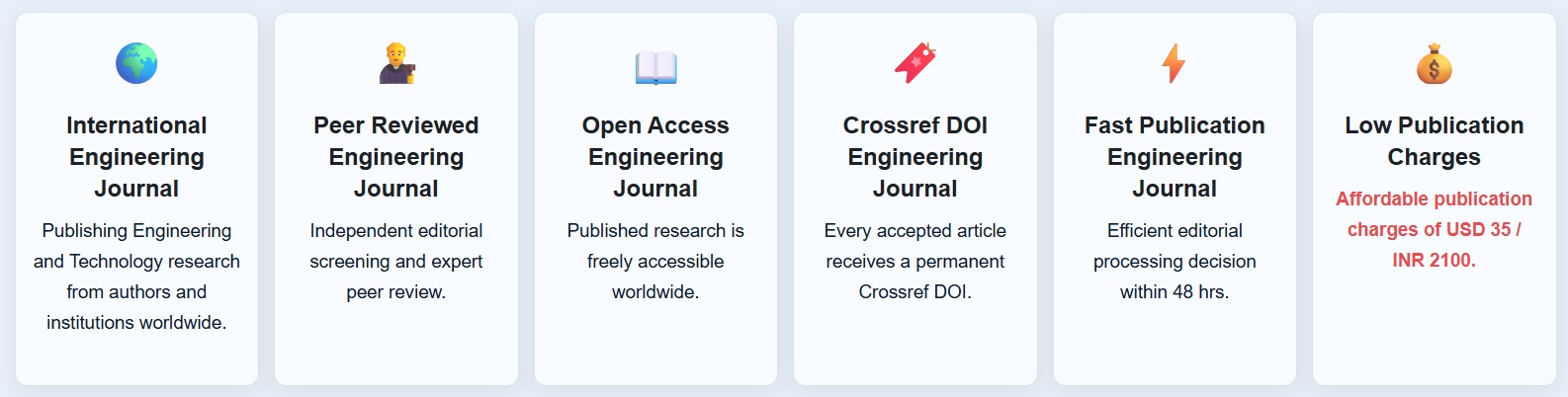
- 🌍 International Open Access Journal
- 👨⚖️ Independent Peer Review
- ⚡ Fast Editorial Processing and Publishing
- 🔗 Crossref DOI at No Additional Cost
- 📜 Free Certificate of Publication
- 💰 Low Article Processing Charges: USD 35 / INR 2100
- 📚 Broad Engineering and Technology Research Coverage
Authors should disclose all relevant financial, professional, institutional, personal, patent, consultancy, employment, and sponsor-related interests before submission. Publication charges do not influence editorial screening, reviewer selection, peer review recommendations, or acceptance decisions.
❓ Frequently Asked Questions About the Conflict of Interest Policy
1. What is the Conflict of Interest Policy of GJETA?
The Conflict of Interest Policy of the Global Journal of Engineering and Technology Advances (GJETA) explains how financial, personal, professional, academic, institutional, and commercial relationships should be identified, disclosed, reviewed, and managed during scholarly publishing.
2. Why is the Conflict of Interest Policy important for authors?
The Conflict of Interest Policy helps authors submitting to the Global Journal of Engineering and Technology Advances (GJETA) disclose funding, employment, consultancy, patents, ownership interests, sponsorship, and other relationships that may influence—or appear to influence—the research.
3. Does disclosure under the Conflict of Interest Policy prevent publication?
No. Disclosure under the Conflict of Interest Policy does not automatically prevent publication in the Global Journal of Engineering and Technology Advances (GJETA). The journal evaluates whether the relationship can be managed transparently while maintaining editorial and research integrity.
4. What financial interests are covered by the Conflict of Interest Policy?
The Conflict of Interest Policy of the Global Journal of Engineering and Technology Advances (GJETA) covers grants, employment, consultancy fees, stock ownership, patents, royalties, licensing arrangements, sponsorship, equipment support, and other relevant financial relationships.
5. How does the Conflict of Interest Policy apply to reviewers?
The Conflict of Interest Policy requires reviewers invited by the Global Journal of Engineering and Technology Advances (GJETA) to disclose relevant relationships and decline assignments when collaboration, competition, institutional affiliation, financial interests, or personal relationships may affect impartiality.
6. How does the Conflict of Interest Policy apply to editors?
Under the Conflict of Interest Policy, an editor of the Global Journal of Engineering and Technology Advances (GJETA) should transfer responsibility for a manuscript when a personal, academic, institutional, professional, or commercial relationship could compromise independent decision-making.
7. What happens when a conflict is not disclosed under the Conflict of Interest Policy?
If a relevant conflict is not disclosed, the Global Journal of Engineering and Technology Advances (GJETA) may request clarification, revise the disclosure statement, reassign a reviewer or editor, issue a correction, publish an expression of concern, or take further action where publication integrity is affected.
8. Does the Conflict of Interest Policy separate publication charges from editorial decisions?
Yes. The Conflict of Interest Policy confirms that publication charges at the Global Journal of Engineering and Technology Advances (GJETA) remain completely separate from editorial screening, independent peer review, revision requirements, and final acceptance decisions.