📚 Author Self-Archiving Policy | Global Journal of Engineering and Technology Advances (GJETA)
Supporting Responsible Repository Deposit and Wider Access to Scholarly Research
The Global Journal of Engineering and Technology Advances (GJETA) supports responsible author self-archiving as a means of improving research visibility, accessibility, preservation, and scholarly communication. Self-archiving allows authors to deposit eligible versions of their manuscripts in institutional repositories, subject repositories, personal academic websites, or other permitted scholarly platforms.
This Author Self-Archiving Policy explains which manuscript versions may be deposited, where authors may archive their work, what citation and linking requirements apply, how published versions should be identified, and how authors should handle copyright, licensing, third-party content, corrections, and retractions.
🎯 Purpose of the Author Self-Archiving Policy
The purpose of this Author Self-Archiving Policy is to provide authors with clear guidance on lawful and responsible repository deposit while protecting the integrity, citation, version history, copyright, and official publication record of articles published by GJETA.
The policy helps GJETA:
- increase the visibility and accessibility of published research;
- support institutional and funder repository requirements;
- promote long-term preservation of scholarly manuscripts;
- clarify which manuscript versions may be deposited;
- ensure that archived copies link to the official publication;
- protect copyright, licensing, and third-party rights;
- prevent confusion between submitted, accepted, and published versions.
📘 Meaning of Author Self-Archiving
Author self-archiving is the practice of depositing a manuscript or article in an online repository or permitted academic platform so that it can be accessed, preserved, discovered, and cited.
Self-archiving may involve deposit in:
- an institutional repository;
- a subject-specific repository;
- a national research repository;
- a funder-designated archive;
- an author’s personal academic website;
- a university or departmental profile;
- another scholarly platform permitted by the journal’s policies.
📄 Manuscript Versions Covered by This Policy
Different stages of a manuscript may have different rights, conditions, and deposit requirements. Authors should identify the version they intend to archive before uploading it.
Submitted Manuscript
The submitted manuscript is the version prepared by the authors before formal peer review. It may also be described as the original submission or pre-review manuscript.
Accepted Manuscript
The accepted manuscript is the version that has completed peer review and incorporates revisions required for acceptance but has not yet undergone final journal formatting, typesetting, copyediting, pagination, or production.
Final Published Version
The final published version is the official article of record made available by GJETA. It includes final formatting, publication metadata, citation information, volume and issue details where applicable, and the Crossref DOI.
⚖️ General Self-Archiving Principles
Authors should archive manuscripts in a way that supports access without creating confusion about the official version of record.
The principal expectations are:
- the archived version should be identified accurately;
- the official journal citation should be included when available;
- the Crossref DOI or official article link should be provided;
- copyright and licensing information should remain visible;
- third-party material should not be deposited beyond the rights granted;
- corrections, retractions, or updates should be reflected appropriately;
- archived copies should not misrepresent the editorial status of the manuscript.
👨🔬 Author Responsibilities
Authors are responsible for ensuring that any manuscript deposited under this policy complies with the journal’s copyright, licensing, open access, confidentiality, authorship, and publication ethics requirements.
Before self-archiving, authors should confirm:
- which manuscript version is being deposited;
- whether the selected repository permits the deposit;
- whether institutional or funder requirements apply;
- whether third-party content may be included;
- whether confidential or restricted material must be removed;
- whether the record links to the official published article;
- whether the article has been corrected, updated, or retracted.
🔓 Relationship with Open Access Publishing
Self-archiving complements the Open Access Policy of GJETA by helping authors and institutions preserve and share scholarly work through additional academic channels.
Repository deposit does not replace the official article published on the journal website. The GJETA version remains the authoritative version of record for citation, corrections, retractions, licensing information, and publication history.
🔗 Crossref DOI and Official Article Link
Once an article has been published, archived records should include the official citation and Crossref DOI whenever available.
Authors are encouraged to use a statement such as:
This manuscript has been published in the Global Journal of Engineering and Technology Advances (GJETA). The official version is available at the article DOI or journal publication page.
📌 Version Transparency Principle
The Global Journal of Engineering and Technology Advances (GJETA) supports author self-archiving when archived manuscripts clearly identify their version, preserve accurate attribution, and link readers to the official published article.
🏛️ Institutional Repositories
Authors may deposit eligible manuscript versions in repositories operated by universities, colleges, research institutes, laboratories, hospitals, government bodies, or other scholarly institutions.
Institutional repository records should include:
- the manuscript title;
- all author names;
- the deposited version;
- the publication status;
- the journal name;
- the final citation when available;
- the Crossref DOI or official article link;
- applicable copyright and licence information.
🔬 Subject-Specific Repositories
Authors may deposit manuscripts in recognised subject repositories relevant to engineering, technology, computer science, artificial intelligence, applied sciences, or interdisciplinary research, provided the deposit complies with the journal’s copyright and licensing conditions.
Authors should ensure that the repository does not alter the manuscript or present an unpublished version as the final version of record.
🏢 Funder and National Repositories
Research funders, government agencies, and national research programmes may require deposit in designated repositories. Authors are responsible for ensuring that publication and repository deposit are compatible with grant conditions, licence requirements, embargoes, and institutional obligations.
Where funder requirements conflict with the author’s understanding of the journal policy, clarification should be obtained before deposit.
🌐 Personal and Academic Websites
Authors may share eligible versions on personal academic websites, university profile pages, or departmental webpages where permitted.
The webpage should:
- identify the manuscript version clearly;
- link to the official published article;
- include the final citation and DOI when available;
- avoid presenting the archived copy as a different publication;
- preserve copyright and licence notices.
👥 Academic Networking Platforms
Authors should exercise care when uploading manuscripts to commercial academic networking platforms. Such services may have their own terms regarding storage, redistribution, reuse, advertising, licensing, or commercial exploitation.
Before uploading, authors should confirm that:
- the journal permits deposit of the selected version;
- the platform does not claim rights beyond those granted by the author;
- third-party copyrighted material may be included;
- the record links to the official GJETA article;
- the article version is labelled accurately.
📤 Deposit of the Submitted Manuscript
Authors may deposit the submitted manuscript where permitted, provided that its pre-review status is stated clearly.
The archived copy should not imply that it has been peer reviewed, accepted, or published unless those events have occurred.
After publication, authors should update the repository record with:
- the final article citation;
- the Crossref DOI;
- a link to the official publication;
- a statement confirming subsequent publication.
✅ Deposit of the Accepted Manuscript
The accepted manuscript may be deposited where permitted, subject to applicable copyright, licensing, repository, funder, and institutional requirements.
The repository record should explain that the manuscript:
- has completed peer review;
- has been accepted for publication;
- is not the final formatted version of record;
- may differ from the final published article in formatting, pagination, or editorial corrections.
📑 Deposit of the Final Published Version
The final published version may be deposited or shared only according to the licence and reuse conditions displayed with the article.
Authors should not assume that permission to archive a submitted or accepted manuscript automatically permits redistribution of the final journal-formatted PDF.
Where deposit of the final version is allowed, the article should retain:
- the journal title;
- author names;
- publication details;
- Crossref DOI;
- copyright and licensing information;
- correction or retraction notices where applicable.
⏳ Embargoes and Delayed Access
If an embargo applies to a particular manuscript version, the repository record may be created before public release, but the file should remain restricted until the embargo expires.
The repository may display metadata during the embargo period, including:
- the article title;
- author names;
- abstract;
- journal name;
- publication citation;
- DOI or official article link.
📝 Version Labels
Authors should use clear version labels to prevent confusion.
Examples include:
- Submitted Manuscript – Not Peer Reviewed
- Accepted Manuscript – Peer Reviewed, Not Final Journal Format
- Final Published Version – Version of Record
🔖 Citation Requirements for Archived Manuscripts
Once the article is published, every archived record should include an accurate citation to the official GJETA publication.
The citation should include:
- all author names according to the journal record;
- the article title;
- the journal name;
- publication year;
- volume and issue where applicable;
- page range or article identifier;
- Crossref DOI.
📄 Repository Metadata
Accurate metadata improve discoverability, citation, version control, and long-term preservation.
Authors should ensure that repository metadata do not:
- identify an unpublished version as the final article;
- omit co-authors;
- use an incorrect journal title;
- provide a broken or unrelated DOI;
- conceal a correction or retraction;
- misrepresent the licence applied to the article.
©️ Copyright and Licensing Requirements
Self-archiving must comply with the Copyright and Licensing Policy of GJETA.
Authors should not deposit or redistribute a version beyond the rights granted by:
- the author agreement;
- the article licence;
- third-party permissions;
- institutional policies;
- funding agreements;
- applicable copyright law.
🖼️ Third-Party Material in Archived Manuscripts
Permission to publish third-party content in a journal article does not always include permission to redistribute it through repositories or academic websites.
Third-party material may include:
- figures and tables;
- photographs and maps;
- questionnaires and assessment tools;
- software screenshots;
- commercial logos;
- copyrighted datasets;
- substantial quotations.
Where repository distribution is not permitted, authors should remove the material, replace it with a citation, or restrict access according to the rights holder’s conditions.
🔐 Confidential and Restricted Information
Authors must not archive confidential, proprietary, private, security-sensitive, or legally restricted content.
This may include:
- personally identifiable participant information;
- confidential peer review correspondence;
- private institutional records;
- unreleased commercial data;
- patent-sensitive engineering designs;
- restricted source code;
- information covered by non-disclosure agreements;
- government or defence-related restricted information.
📊 Supplementary Files and Research Data
Supplementary files, source code, datasets, multimedia content, and research documentation may have separate deposit conditions from the manuscript itself.
Authors should consult the Data Sharing Policy and confirm:
- ownership of the materials;
- participant consent and privacy requirements;
- repository licence conditions;
- third-party restrictions;
- security and confidentiality obligations;
- whether the files correspond to the final published article.
💻 Software and Source-Code Archiving
Software and source code may be deposited in appropriate repositories when authors have the right to share them and when disclosure does not create security, confidentiality, patent, or licensing concerns.
Archived code should preferably include:
- a clear licence;
- version information;
- software dependencies;
- documentation or instructions;
- a citation to the associated article;
- known limitations or security considerations.
✏️ Corrections to Published Articles
If a published article is corrected, authors should update repository records and personal webpages to help readers identify the current and accurate version.
The archived record should:
- link to the official correction notice;
- avoid displaying outdated information without warning;
- state that the article has been corrected;
- direct readers to the official version of record.
⛔ Retractions and Expressions of Concern
If an article is retracted or becomes subject to an expression of concern, archived copies must not be presented as unaffected or current research.
Authors and repository managers should:
- retain the scholarly record where appropriate;
- mark the item clearly as retracted or under concern;
- link to the official editorial notice;
- prevent continued circulation without the relevant warning;
- avoid deleting the historical record in a way that conceals the retraction.
🔄 Updating Repository Records
Authors are encouraged to review archived records after publication and after any post-publication update.
Updates may be needed when:
- the manuscript is formally accepted;
- the article is published;
- the Crossref DOI becomes available;
- the citation changes;
- a correction is issued;
- the article is retracted;
- the licence or access status changes.
🚨 Misrepresentation of Archived Versions
Authors or third parties must not alter, relabel, or present archived manuscripts in a way that misleads readers regarding peer-review status, acceptance, publication, journal endorsement, authorship, or article version.
Examples of misrepresentation include:
- presenting a submitted manuscript as peer reviewed;
- removing co-authors from an archived copy;
- claiming publication before acceptance;
- removing retraction or correction information;
- using journal branding on an unofficial version in a misleading way;
- replacing the published article with a materially different document.
🔍 Handling Self-Archiving Concerns
GJETA may review concerns involving unauthorised repository deposit, inaccurate version labelling, copyright infringement, missing attribution, third-party content, or misleading publication status.
The journal may:
- contact the author;
- request correction of repository metadata;
- request removal or replacement of an unauthorised file;
- contact a repository, institution, or platform;
- clarify the official version of record;
- take action under the Copyright and Licensing Policy.
📢 Complaints and Appeals
Authors may raise a complaint or appeal when they believe a self-archiving restriction, removal request, version decision, or licence interpretation has been applied incorrectly.
The request should identify:
- the article or manuscript;
- the deposited version;
- the repository or platform;
- the relevant licence or agreement;
- supporting documentation;
- the resolution requested.
🛠️ Enforcement of the Author Self-Archiving Policy
The action taken by GJETA will depend on the nature, seriousness, and evidence of the concern.
Possible actions may include:
- requesting accurate version labelling;
- requiring addition of the official citation and DOI;
- requesting removal of restricted third-party content;
- requesting replacement of an unauthorised version;
- contacting the repository or hosting platform;
- correcting publication or metadata records;
- taking further action in cases of deliberate copyright infringement or misrepresentation.
📌 Responsible Archiving Principle
The Global Journal of Engineering and Technology Advances (GJETA) encourages responsible repository deposit that expands access while preserving accurate version identification, copyright compliance, author attribution, and the integrity of the official publication record.
🌟 Why the Author Self-Archiving Policy Matters
A clear Author Self-Archiving Policy helps researchers share their work through repositories and academic platforms without creating uncertainty about copyright, article versions, peer-review status, or the official publication record.
For the Global Journal of Engineering and Technology Advances (GJETA), responsible self-archiving supports wider access to engineering and technology research while helping institutions, funders, libraries, authors, and readers identify the authoritative version of each article.
The Author Self-Archiving Policy helps GJETA:
- increase research visibility and accessibility;
- support institutional and funder repository requirements;
- promote long-term preservation;
- clarify manuscript version rights;
- connect archived copies with the official article DOI;
- protect third-party copyright and confidential information;
- maintain accurate correction and retraction records;
- prevent misleading or unauthorised redistribution.
🔗 Related GJETA Editorial and Publishing Policies
Authors, librarians, repository managers, institutions, and readers are encouraged to review the following policies of the Global Journal of Engineering and Technology Advances for a complete understanding of self-archiving, open access, copyright, research data, publication ethics, and scholarly reuse.
🚀 Publish and Share Your Research Responsibly with GJETA
The Global Journal of Engineering and Technology Advances (GJETA) provides an international open access platform for original research articles, review papers, technical studies, software research, case studies, short communications, and interdisciplinary manuscripts.
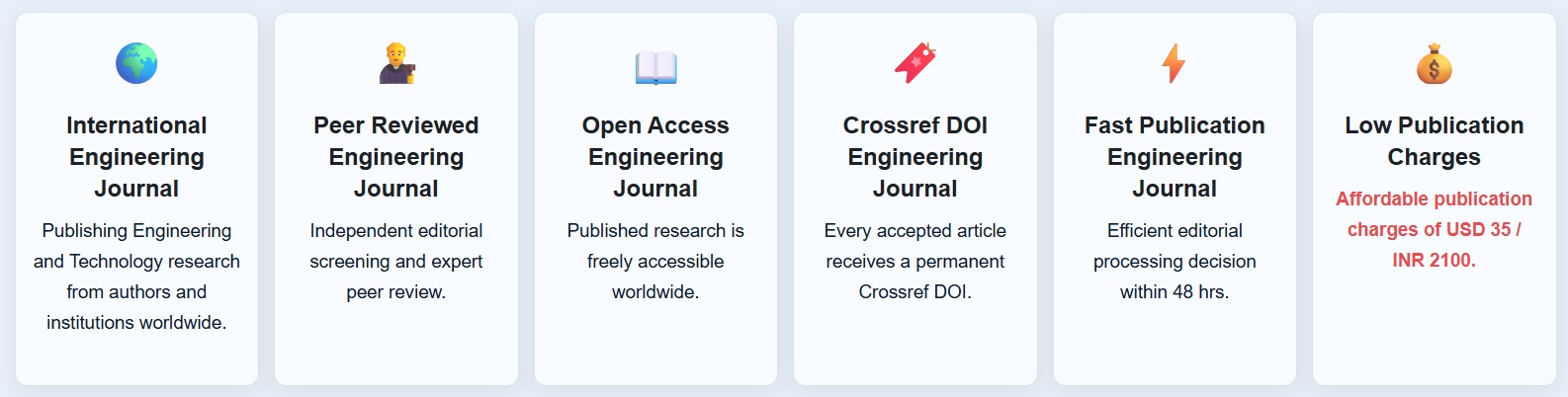
- 🌍 International Open Access Journal
- 👨⚖️ Independent Peer Review
- ⚡ Fast Editorial Processing and Publishing
- 🔗 Crossref DOI at No Additional Cost
- 📜 Free Certificate of Publication
- 💰 Low Article Processing Charges: USD 35 / INR 2100
- 📚 Broad Engineering and Technology Research Coverage
Authors should review the journal’s self-archiving, copyright, licensing, open access, data-sharing, and publication ethics requirements before depositing any manuscript version. Publication charges do not influence editorial screening, peer review, revision requirements, or acceptance decisions.
❓ Frequently Asked Questions About the Author Self-Archiving Policy
1. What is the Author Self-Archiving Policy of GJETA?
The Author Self-Archiving Policy of the Global Journal of Engineering and Technology Advances (GJETA) explains how authors may deposit eligible manuscript versions in repositories, personal academic websites, institutional archives, or other permitted scholarly platforms.
2. Which versions are covered by the Author Self-Archiving Policy?
The Author Self-Archiving Policy of the Global Journal of Engineering and Technology Advances (GJETA) distinguishes between the submitted manuscript, accepted manuscript, and final published version because different conditions may apply to each.
3. Does the Author Self-Archiving Policy allow institutional repository deposit?
Yes. The Author Self-Archiving Policy allows authors of the Global Journal of Engineering and Technology Advances (GJETA) to deposit eligible manuscript versions in institutional repositories when copyright, licensing, citation, and version-labelling requirements are followed.
4. What citation is required under the Author Self-Archiving Policy?
Under the Author Self-Archiving Policy, authors publishing with the Global Journal of Engineering and Technology Advances (GJETA) should add the final article citation, journal name, Crossref DOI, and official publication link once these details become available.
5. Can authors archive the final PDF under the Author Self-Archiving Policy?
The Author Self-Archiving Policy permits deposit of the final published version of a Global Journal of Engineering and Technology Advances (GJETA) article only when allowed by the article licence and applicable copyright conditions.
6. How does the Author Self-Archiving Policy apply to third-party material?
The Author Self-Archiving Policy requires authors of the Global Journal of Engineering and Technology Advances (GJETA) to confirm that figures, tables, images, datasets, and other third-party materials may legally be redistributed through the selected repository.
7. What happens after a correction or retraction under the Author Self-Archiving Policy?
The Author Self-Archiving Policy requires authors and repository managers to update archived records of Global Journal of Engineering and Technology Advances (GJETA) articles and link clearly to the official correction, expression of concern, or retraction notice.
8. Does the Author Self-Archiving Policy replace the official GJETA article?
No. The Author Self-Archiving Policy confirms that repository copies do not replace the official article published by the Global Journal of Engineering and Technology Advances (GJETA), which remains the authoritative version of record.