©️ Copyright and Licensing Policy | Global Journal of Engineering and Technology Advances (GJETA)
Clarifying Author Rights, Reuse Permissions and Open Access Licensing
The Global Journal of Engineering and Technology Advances (GJETA) is committed to transparent copyright management and responsible reuse of scholarly content. A clear copyright and licensing framework helps authors understand their rights, enables readers to know how published articles may be accessed and reused, and protects the integrity and attribution of scholarly work.
This Copyright and Licensing Policy explains the rights and responsibilities of authors, readers, editors, and third parties in relation to manuscripts and articles published by GJETA. It addresses copyright ownership, publication permissions, open access licensing, attribution, reuse, adaptations, third-party material, author responsibilities, and the handling of copyright concerns.
🎯 Purpose of the Copyright and Licensing Policy
The purpose of this Copyright and Licensing Policy is to establish clear conditions governing ownership, publication, distribution, access, reuse, and protection of scholarly content published by GJETA.
The policy helps GJETA:
- clarify the copyright rights of authors;
- explain how published articles may be accessed and reused;
- promote lawful and properly attributed scholarly communication;
- protect authors against unauthorised copying or misrepresentation;
- support responsible open access publishing;
- explain requirements for third-party copyrighted material;
- maintain transparency regarding licences and permissions.
📘 Meaning of Copyright
Copyright is a legal right that protects original creative and scholarly works, including research articles, review papers, figures, tables, diagrams, photographs, software, source code, illustrations, and other intellectual content.
Copyright may protect:
- the written expression of ideas;
- original figures, diagrams, and graphical content;
- tables and data presentations involving original selection or arrangement;
- photographs and technical illustrations;
- software and source code;
- supplementary files and multimedia content;
- original educational or research materials.
Copyright generally protects the form in which ideas are expressed rather than the underlying facts, principles, methods, or scientific concepts themselves.
👨🔬 Author Rights and Copyright Ownership
Authors submitting manuscripts to the Global Journal of Engineering and Technology Advances (GJETA) should hold the necessary rights to publish the submitted work or have obtained permission from the relevant copyright holder.
Authors should ensure that:
- the manuscript is their original work;
- all co-authors have approved submission and publication;
- third-party material has been cited and used lawfully;
- required permissions have been obtained;
- the work does not violate copyright, contractual, institutional, or licensing obligations;
- the journal is authorised to publish and distribute the accepted article.
📝 Author Declaration at Submission
By submitting a manuscript, authors confirm that the work is original and that they have the authority to grant the journal the permissions required for editorial processing, publication, distribution, indexing, archiving, and public access.
Authors also confirm that the manuscript:
- has not been published previously in substantially the same form, except where transparently disclosed;
- does not contain unlawfully reproduced copyrighted material;
- does not infringe the intellectual property rights of another person or organisation;
- complies with relevant institutional, contractual, funding, and licensing requirements.
📄 Licence to Publish
Authors whose manuscripts are accepted may be required to grant GJETA a licence to publish, reproduce, distribute, display, archive, index, and make the article available through the journal website and relevant scholarly services.
The licence to publish allows the journal to:
- publish the article online;
- distribute the article through digital platforms;
- provide metadata to indexing and discovery services;
- archive and preserve the scholarly record;
- link corrections, retractions, and updates to the article;
- promote lawful access to the publication.
🔓 Open Access Publishing
Articles published by GJETA are made available through an open access model, allowing readers to access scholarly content online without subscription barriers.
Open access improves:
- global availability of research;
- scholarly visibility and discoverability;
- research dissemination across institutions and countries;
- educational and professional use;
- potential for citation and reuse;
- public access to scientific and technical knowledge.
📜 Open Access Licence
Published articles may be made available under a stated open access licence. The licence displayed with the article determines how readers may copy, share, distribute, adapt, translate, or reuse the work.
Users must follow the specific terms stated on the article page, PDF, or journal website. Proper attribution to the original authors, article title, journal, publication details, and source must be maintained whenever content is reused.
📌 Copyright Transparency Principle
The Global Journal of Engineering and Technology Advances (GJETA) supports open access to scholarly research while protecting author attribution, publication integrity, and compliance with applicable copyright and licensing requirements.
🔁 Permitted Reuse of Published Articles
Readers, researchers, educators, institutions, and other users may reuse published material only in accordance with the licence applied to the article and applicable copyright law.
Permitted reuse may include:
- reading and downloading the article;
- sharing the article through lawful channels;
- using the article for educational or scholarly purposes;
- quoting limited portions with proper citation;
- linking to the official article page;
- depositing permitted versions in repositories;
- preparing adaptations or translations where allowed by the licence.
🏷️ Attribution Requirements
Any reuse of material published by GJETA should include clear and accurate attribution. Attribution protects author recognition and helps readers locate the original scholarly source.
Appropriate attribution may include:
- the names of the authors;
- the title of the article;
- the name of the Global Journal of Engineering and Technology Advances;
- the year, volume, issue, and page information where applicable;
- the article DOI or official publication link;
- an indication of whether the material was modified.
✂️ Adaptations, Translations and Modified Content
Where permitted by the applicable licence, users may adapt, translate, summarise, or modify published content. Any modified version should clearly state that changes were made and should not imply that the original authors or GJETA endorse the adaptation.
Adapted content must not:
- misrepresent the original findings;
- alter conclusions in a misleading manner;
- remove author attribution;
- conceal corrections, retractions, or publication notices;
- damage the academic reputation of the authors through deceptive presentation.
🚫 Prohibited Uses
The following uses are not permitted unless separately authorised:
- removing or falsifying author attribution;
- presenting the article as the work of another person;
- selling or redistributing content in violation of the applicable licence;
- altering research findings in a misleading way;
- removing copyright, licensing, correction, or retraction information;
- using published material to create a false endorsement;
- reproducing third-party material beyond the rights granted;
- using the content in a manner that violates law, privacy, ethics, or contractual obligations.
🖼️ Figures, Tables and Images
Figures, tables, diagrams, photographs, maps, screenshots, and other visual materials may be protected by copyright independently of the article text.
Before reuse, users should determine:
- whether the visual material was created by the authors;
- whether it is covered by the article’s open access licence;
- whether a separate copyright notice applies;
- whether permission from a third-party rights holder is required;
- whether the material may be modified.
©️ Third-Party Copyrighted Material
Authors are responsible for identifying copyrighted material created by third parties and obtaining permission where required before publication.
Third-party material may include:
- published figures and tables;
- photographs and illustrations;
- maps and technical diagrams;
- questionnaires and assessment tools;
- software screenshots;
- commercial logos and trademarks;
- copyrighted datasets;
- substantial quotations.
📨 Permission Documentation
The journal may request copies of written permissions, licences, emails, or other documentation confirming the author’s right to reproduce third-party material.
Permission should clearly identify:
- the material being reused;
- the original rights holder;
- the permitted type of use;
- whether online open access publication is allowed;
- whether modification or adaptation is permitted;
- any required credit line or acknowledgement.
📚 Material in the Public Domain
Some content may no longer be protected by copyright or may have been released into the public domain. Even when permission is not required, authors should still provide appropriate scholarly attribution where the source is relevant.
💻 Software, Code and Open-Source Licences
Software, source code, scripts, libraries, plugins, models, and digital tools may be governed by specific copyright and licence terms.
Authors should:
- identify third-party software used in the research;
- comply with open-source or commercial licence conditions;
- provide required notices or acknowledgements;
- avoid redistributing restricted code without permission;
- state the licence applied to original code where appropriate.
📊 Datasets and Database Rights
Datasets may be protected by copyright, database rights, contractual conditions, privacy requirements, or repository licences. Authors should ensure that they have permission to reproduce, redistribute, or publish data obtained from external sources.
The source and licence of third-party datasets should be described clearly in the manuscript.
🏢 Institutional and Employer Rights
Copyright ownership may sometimes belong partly or entirely to an institution, employer, research organisation, sponsor, or government body depending on employment contracts, research agreements, institutional policies, or applicable law.
Authors should confirm their authority to publish before submission and obtain institutional approval where required.
💰 Funders and Contractual Obligations
Funding agreements may impose requirements regarding open access, repository deposit, licensing, embargoes, commercialisation, or intellectual property. Authors are responsible for ensuring that publication in GJETA is compatible with these obligations.
📚 Author Self-Archiving
Authors may be permitted to deposit certain versions of their manuscripts in institutional repositories, subject repositories, personal websites, or academic networks according to the journal’s self-archiving conditions and the licence applied to the article.
Authors should consult the Author Self-Archiving Policy before depositing:
- the submitted manuscript;
- the accepted manuscript;
- the final published version;
- supplementary material.
🔖 Repository Attribution
Where repository deposit is allowed, the archived record should include accurate citation details and a link to the official published article.
The repository version should not create confusion regarding:
- which version is being displayed;
- the date of publication;
- the final citation;
- the article DOI;
- any correction or retraction notice.
🧾 Copyright Notices
Copyright, licence, author attribution, and publication details should remain visible on published or archived copies. Users must not remove or alter notices that explain ownership, licensing, corrections, or restrictions.
🚨 Copyright Infringement Concerns
Authors, rights holders, readers, publishers, institutions, or other parties may report suspected copyright infringement involving submitted or published material.
A complaint should identify:
- the affected manuscript or article;
- the material alleged to have been copied or used without permission;
- the original protected work;
- the identity of the rights holder;
- supporting documentation where available;
- the action requested.
🔍 Investigation of Copyright Complaints
When a credible copyright concern is received, GJETA may:
- review the submitted or published material;
- compare it with the original source;
- request clarification from the authors;
- request permission or licence documentation;
- contact the rights holder or relevant institution;
- seek legal or publishing guidance where necessary;
- suspend publication or access while the matter is reviewed.
📝 Author Response to Copyright Concerns
Authors may be asked to explain the source, ownership, permission status, or licence terms of disputed material. They should respond promptly and provide complete documentation.
Failure to provide evidence of permission or lawful reuse may result in editorial or post-publication action.
✏️ Corrections Related to Copyright
A correction may be appropriate when attribution, credit lines, licence information, or permission details are incomplete or inaccurate but the article can remain part of the scholarly record.
A correction may:
- add a missing credit line;
- replace a figure or table;
- remove material that cannot be licensed;
- correct a copyright notice;
- clarify the licence applied to specific content;
- update author or third-party rights information.
⛔ Removal or Retraction
Removal or retraction may be considered when serious copyright infringement affects a substantial or essential part of the article and cannot be corrected adequately.
Possible grounds may include:
- extensive unauthorised copying;
- fraudulent ownership claims;
- use of protected images, code, or data without permission;
- publication that violates a binding legal restriction;
- deliberate concealment of third-party rights.
⚠️ Expressions of Concern
An expression of concern may be published when a serious copyright dispute remains unresolved and further investigation or legal clarification is required.
📢 Complaints and Appeals
Authors and rights holders may appeal an editorial decision related to copyright or licensing when they believe relevant evidence was overlooked, ownership was misunderstood, or the response was disproportionate.
An appeal should include clear supporting documentation and may be reviewed by an editor or advisor not involved in the original decision.
🛠️ Enforcement of the Copyright and Licensing Policy
The action taken by GJETA will depend on the seriousness of the concern, the available evidence, the stage of publication, and whether the issue can be corrected.
Possible actions include:
- requesting permission documentation;
- requiring revision or replacement of copyrighted material;
- rejecting or withdrawing a manuscript;
- removing disputed content temporarily;
- issuing a correction or expression of concern;
- retracting an article in serious cases;
- contacting the rights holder, institution, publisher, or other responsible authority;
- restricting future submissions in cases of deliberate or repeated infringement.
📌 Rights and Reuse Principle
The Global Journal of Engineering and Technology Advances (GJETA) supports lawful sharing and reuse of scholarly research while requiring accurate attribution, respect for third-party rights, transparent licensing, and protection of the integrity of published work.
🌟 Why the Copyright and Licensing Policy Matters
A clear Copyright and Licensing Policy helps authors understand what rights they hold, what permissions they grant for publication, and how their articles may be accessed and reused. It also helps readers, educators, researchers, institutions, repositories, and publishers use scholarly content responsibly.
For the Global Journal of Engineering and Technology Advances (GJETA), transparent copyright and licensing are especially important because engineering and technology articles may include software, source code, figures, technical drawings, datasets, algorithms, photographs, product designs, and industrially relevant intellectual property.
The Copyright and Licensing Policy helps GJETA:
- protect author rights and attribution;
- support lawful open access reuse;
- clarify permissions for sharing and adaptation;
- manage third-party copyrighted material;
- support repository deposit and long-term access;
- prevent unauthorised copying or misrepresentation;
- maintain transparent and reliable publication records.
🔗 Related GJETA Editorial and Publishing Policies
Authors, readers, editors, and institutions are encouraged to review the following policies of the Global Journal of Engineering and Technology Advances for a complete understanding of open access, self-archiving, authorship, originality, data sharing, and responsible scholarly reuse.
🚀 Publish Open Access Research with GJETA
The Global Journal of Engineering and Technology Advances (GJETA) welcomes original research articles, review papers, technical studies, software research, case studies, and interdisciplinary manuscripts prepared with proper copyright ownership, permission documentation, attribution, and licensing compliance.
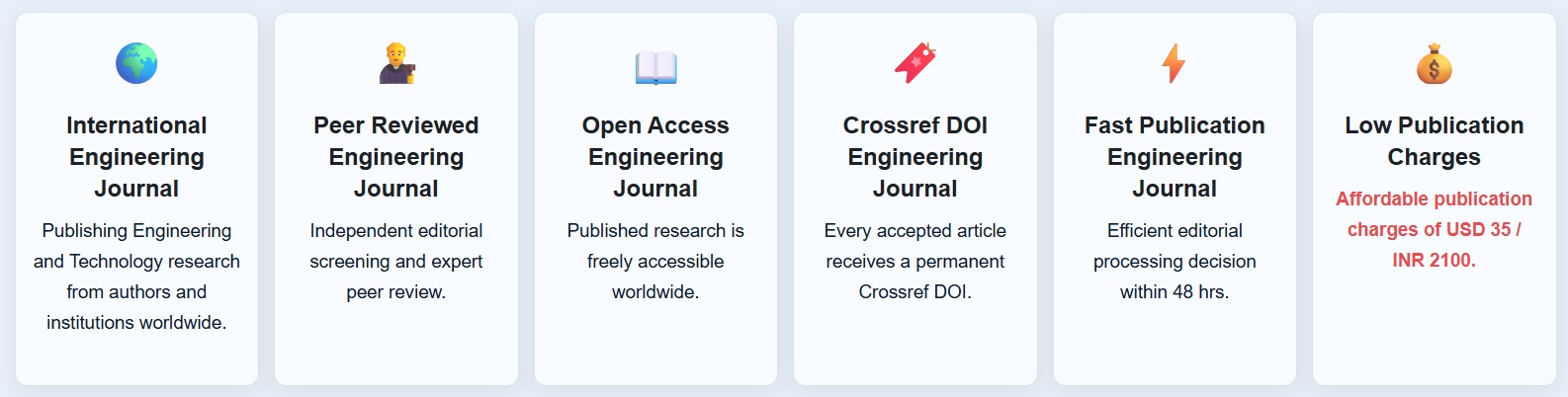
- 🌍 International Open Access Journal
- 👨⚖️ Independent Peer Review
- ⚡ Fast Editorial Processing and Publishing
- 🔗 Crossref DOI at No Additional Cost
- 📜 Free Certificate of Publication
- 💰 Low Article Processing Charges: USD 35 / INR 2100
- 📚 Broad Engineering and Technology Research Coverage
Authors should confirm ownership of submitted content, obtain permission for third-party material, provide accurate attribution, and review all copyright and licence obligations before submission. Publication charges do not influence editorial screening, independent peer review, or acceptance decisions.
❓ Frequently Asked Questions About the Copyright and Licensing Policy
1. What is the Copyright and Licensing Policy of GJETA?
The Copyright and Licensing Policy of the Global Journal of Engineering and Technology Advances (GJETA) explains author rights, publication permissions, open access licensing, attribution, reuse, third-party material, repository deposit, and the handling of copyright concerns.
2. Why is the Copyright and Licensing Policy important for authors?
The Copyright and Licensing Policy helps authors submitting to the Global Journal of Engineering and Technology Advances (GJETA) understand ownership, permission requirements, reuse conditions, licensing responsibilities, and the rights required for publication.
3. Does the Copyright and Licensing Policy allow readers to share published articles?
The Copyright and Licensing Policy allows readers to share articles published by the Global Journal of Engineering and Technology Advances (GJETA) according to the licence displayed with the article and provided that proper attribution is maintained.
4. How does the Copyright and Licensing Policy apply to figures and tables?
The Copyright and Licensing Policy of the Global Journal of Engineering and Technology Advances (GJETA) requires users to check whether figures, tables, images, or diagrams are covered by the article licence or subject to separate third-party restrictions.
5. What does the Copyright and Licensing Policy require for third-party material?
Under the Copyright and Licensing Policy, authors publishing with the Global Journal of Engineering and Technology Advances (GJETA) must cite third-party material accurately and obtain permission where required before publication.
6. Does the Copyright and Licensing Policy cover software and source code?
Yes. The Copyright and Licensing Policy of the Global Journal of Engineering and Technology Advances (GJETA) applies to software, source code, scripts, algorithms, models, libraries, and other digital research outputs governed by copyright or licence terms.
7. Can authors archive articles under the Copyright and Licensing Policy?
The Copyright and Licensing Policy permits authors of the Global Journal of Engineering and Technology Advances (GJETA) to archive eligible manuscript versions according to the journal’s Author Self-Archiving Policy and the licence applied to the article.
8. What happens when copyright infringement is identified under the Copyright and Licensing Policy?
When infringement is identified, the Global Journal of Engineering and Technology Advances (GJETA) may request permission documentation, require replacement or removal of material, reject the manuscript, issue a correction, publish an expression of concern, or retract the article.